 By
By A practical guide to one of Hawaii’s most iconic marine wildlife encounters
Swimming with manta rays in Kona has become one of the most sought-after wildlife experiences in the Hawaiian Islands. Each evening, as darkness settles over the Kona Coast, dozens of visitors gather at specific sites along the Big Island’s western shoreline to witness these gentle giants glide through illuminated waters in search of plankton. Unlike many marine wildlife encounters that depend heavily on luck and seasonal timing, the Kona manta ray experience offers remarkably consistent sightings year-round, drawing an estimated tens of thousands of participants annually. Yet the experience itself differs significantly from what many first-time visitors imagine, and understanding what actually happens during these nighttime excursions helps set realistic expectations.
How the Night Dive and Snorkel Experience Works
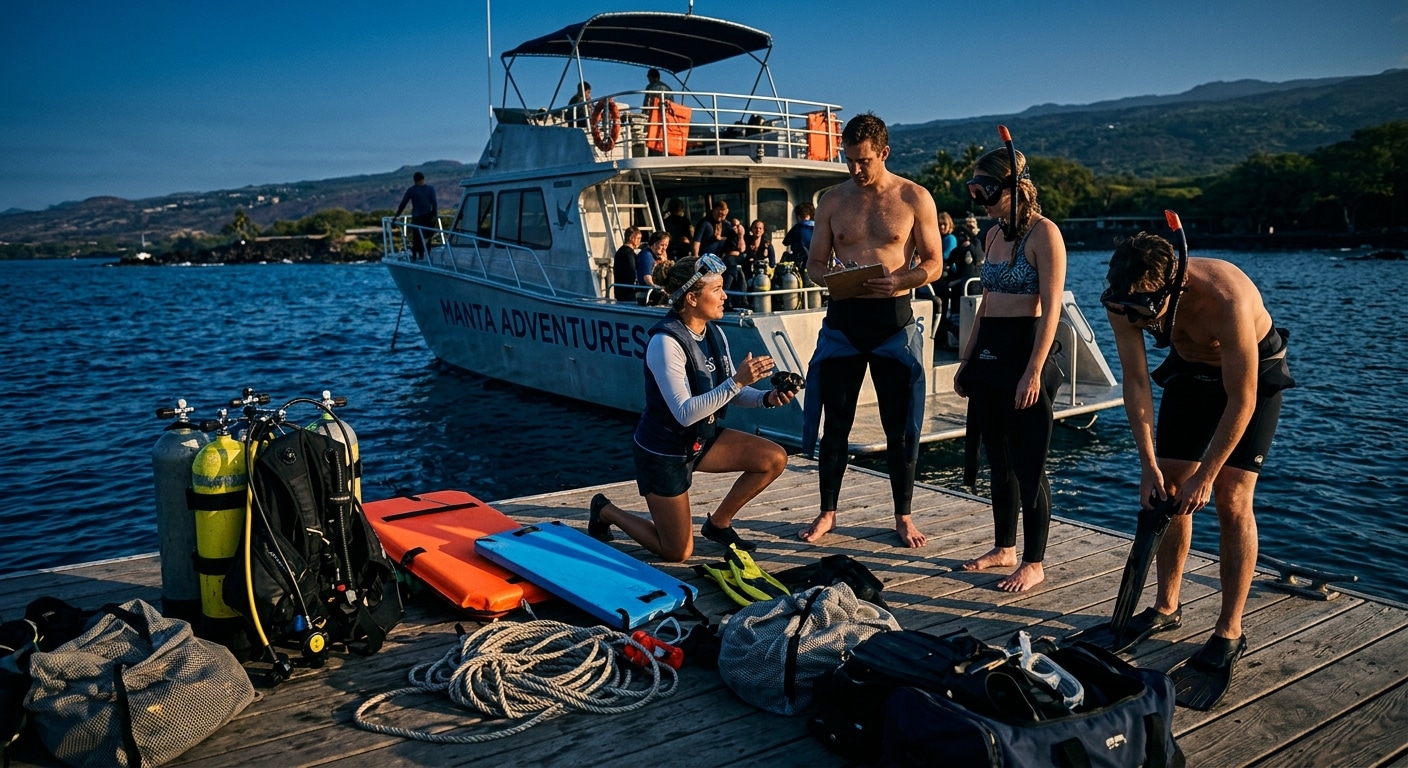
The manta ray viewing experience in Kona operates on a predictable routine that has developed over several decades. Tour operators transport guests to one of several known manta feeding sites, with the area near the Sheraton Kona Resort at Keauhou Bay and a site called Manta Village off the Kona airport being the most established locations. Once boats arrive and anchor, participants enter the water either as snorkelers floating at the surface or as certified scuba divers descending to the sandy bottom approximately 25 to 40 feet below.
The key element that draws manta rays to these locations is light. Operators use underwater lights and illuminated surfboards to attract plankton, which in turn attracts the filter-feeding mantas. Snorkelers typically hold onto a floating platform equipped with lights pointing downward, while divers position themselves on the seafloor and shine lights upward. The mantas then perform their characteristic feeding behavior, doing repeated somersaults through the concentrated plankton cloud, often passing within inches of observers.
The mantas encountered in Kona are reef manta rays (Mobula alfredi), distinct from the larger oceanic manta ray species. Reef mantas typically reach wingspans of 11 to 15 feet, though some individuals grow larger. Many Kona mantas have been individually identified by their unique belly spot patterns, with researchers maintaining a catalog of known individuals.
Physical Requirements and Water Conditions
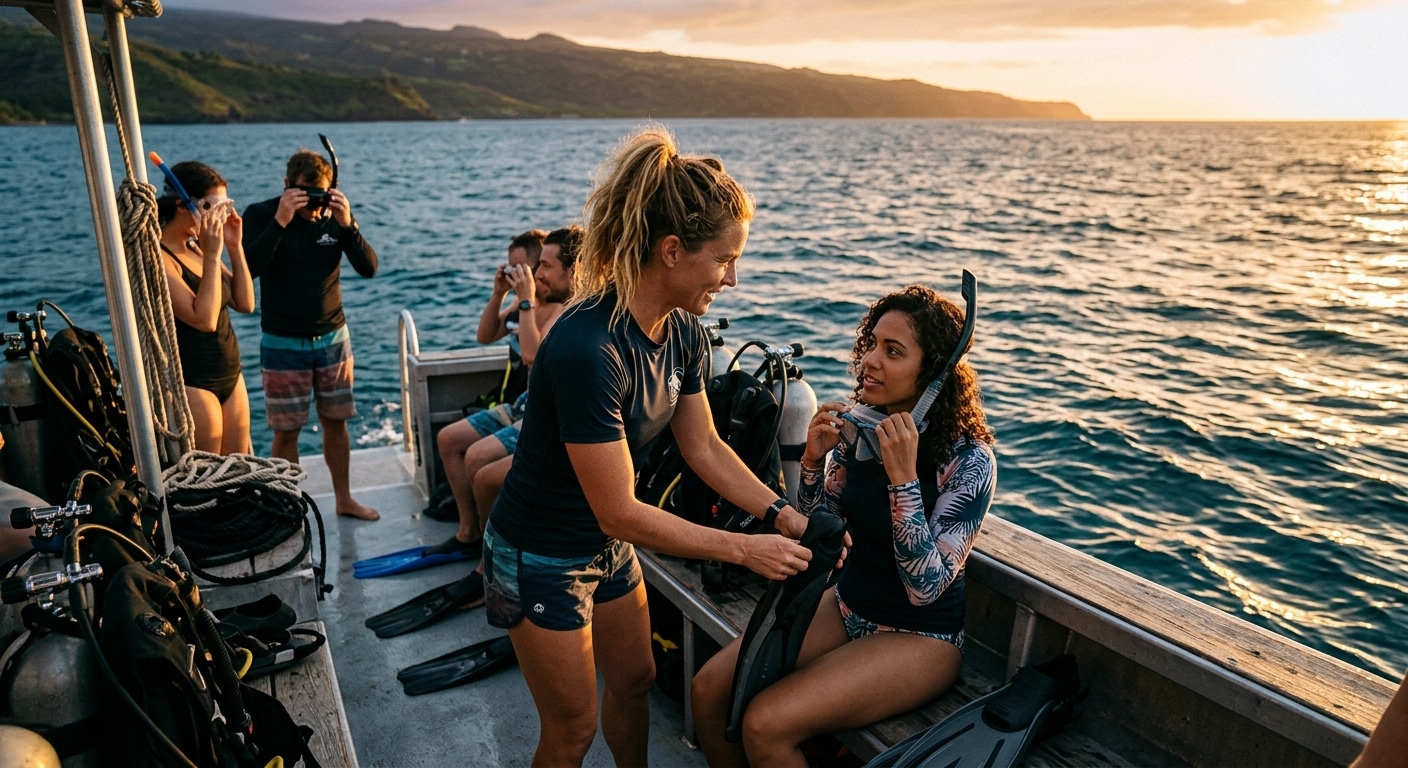
The snorkeling option requires participants to be comfortable floating in open ocean water at night, which proves more challenging psychologically than physically for many people. The depth of the water beneath snorkelers ranges from 25 to 60 feet depending on the site, and while flotation devices are provided, the inability to see the bottom clearly and the darkness surrounding the illuminated area can cause anxiety in those unaccustomed to open-water swimming.
Ocean conditions along the Kona Coast are generally calmer than other areas of Hawaii due to the sheltering effect of Mauna Loa and Hualalai volcanoes, which block the prevailing trade winds. However, swells can still create surface chop, and seasickness affects a notable percentage of participants during the boat ride or while floating in the water. Tour operators typically monitor conditions and may cancel trips when wave heights exceed safe thresholds, though cancellation policies vary by company.
Snorkel Option
Surface floating with lights, no certification required, suitable for most swimming abilities
Dive Option
Bottom positioning at 25-40 feet, requires scuba certification, closer proximity possible
Duration
Total trip time typically 2-3 hours, with 30-60 minutes of actual water time
Choosing a Manta Ray Tour Operator
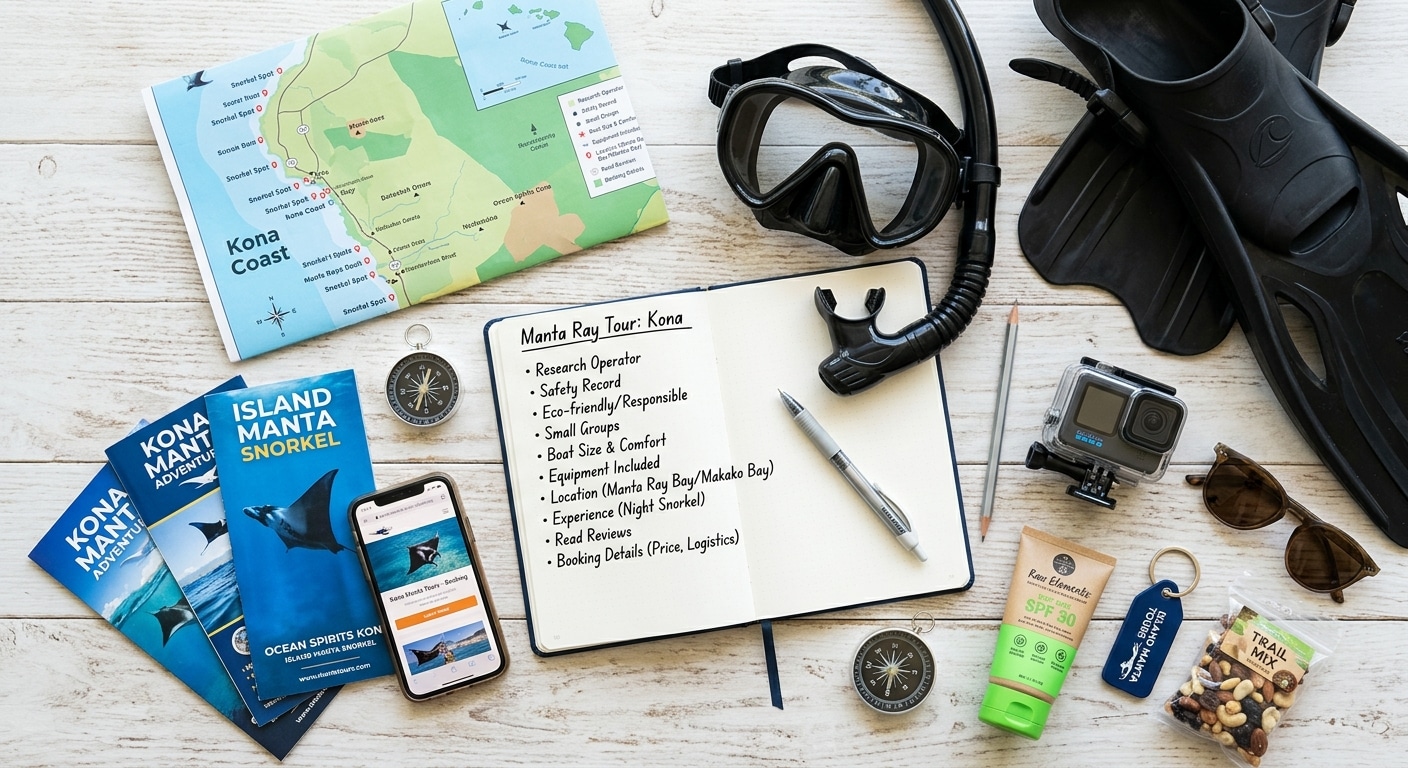
Numerous operators run manta ray excursions from Kona, ranging from large boats carrying 20 or more passengers to smaller six-pack vessels offering more personalized experiences. The core experience remains similar across operators since all visit the same general sites and use the same light-attraction technique. Differences emerge in boat comfort, group size, departure location, and the level of instruction provided to participants unfamiliar with snorkeling or diving.
Operators such as the Sunset Manta Ray Snorkel Tour run evening trips timed to the manta feeding window, departing before sunset to allow participants to enjoy the coastal scenery before the main event begins after dark. Most tours provide all necessary equipment including wetsuits, which prove essential given that water temperatures, while warm by mainland standards at around 75 to 80 degrees Fahrenheit, feel cool after extended immersion.
Manta Ray Sighting Rates and Behavior Patterns
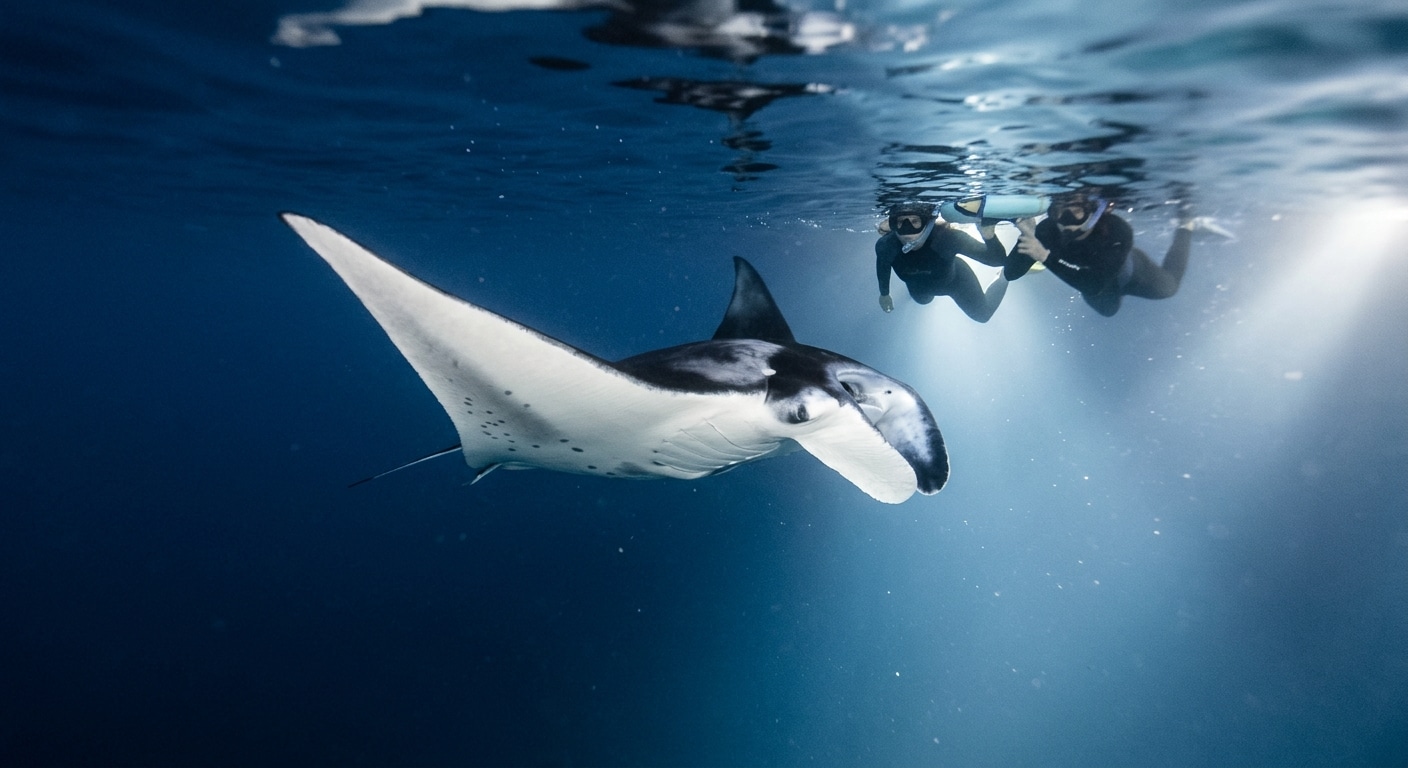
Unlike whale watching or swimming with dolphins, manta ray encounters in Kona boast unusually high success rates. The resident population of reef mantas along the Kona Coast has been studied extensively, with individual animals showing strong site fidelity to the established feeding locations. While no wildlife encounter carries a guarantee, the vast majority of tours report manta sightings, with blank nights being relatively uncommon though not unheard of.
The number of mantas appearing on any given night varies considerably. Some evenings bring a single animal, while others feature a dozen or more mantas performing their aerial ballet through the plankton-rich waters. Factors influencing manta attendance include moon phase, plankton density, and ocean current patterns, though predicting exactly which nights will produce the best viewing remains imprecise. Mantas are wild animals following their own foraging patterns, and their presence can never be compelled regardless of how many lights illuminate the water.
The experience involves floating in dark open ocean water for 30 to 60 minutes. Participants should honestly assess their comfort level with these conditions, as refunds are typically not provided for those who choose not to enter the water. Those prone to seasickness should consider preventive medication, and non-swimmers or weak swimmers may find the experience stressful despite flotation assistance.