
Kīlauea’s Latest Eruption: What to Know About Episode 54

Volcanic Activity Report

Kīlauea’s Latest Eruption: What to Know About Episode 54

Hawaii’s most active volcano resumes eruptive activity within Halemaʻumaʻu crater, drawing scientific attention and visitor interest to Hawaiʻi Volcanoes National Park.

Kīlauea volcano, one of the most monitored and studied volcanoes on Earth, has once again captured global attention with its latest eruption. The United States Geological Survey’s Hawaiian Volcano Observatory confirmed that Episode 54 of Kīlauea’s ongoing eruptive sequence began in late 2024, continuing a pattern of intermittent volcanic activity that has characterized this remarkable shield volcano for decades. Located within Hawaiʻi Volcanoes National Park on the Big Island, Kīlauea’s latest eruption offers both scientific insights and spectacular displays of nature’s power, drawing researchers and visitors alike to witness molten lava illuminating the Hawaiian night sky.

Understanding the Halemaʻumaʻu Crater Activity

Understanding the Halemaʻumaʻu Crater Activity

The current eruptive episode is centered within Halemaʻumaʻu crater, the summit caldera that has been the focal point of Kīlauea’s activity in recent years. According to the Hawaiian Volcano Observatory, the eruption follows a pattern that has become familiar since the dramatic 2018 lower East Rift Zone eruption fundamentally altered the volcano’s plumbing system. Lava fountains and surface flows within the crater have created new lava lakes, adding to the geological complexity of this dynamic landscape. The activity remains confined to the summit region, which sits entirely within the boundaries of Hawaiʻi Volcanoes National Park, allowing for relatively safe observation from designated viewing areas.

Key Location Facts

Kīlauea rises approximately 4,091 feet above sea level and is situated on the southeastern side of the Big Island. Halemaʻumaʻu crater, where the current activity is concentrated, measures roughly 3,000 feet in diameter and has been a site of Hawaiian cultural significance for centuries, traditionally associated with Pele, the Hawaiian goddess of volcanoes and fire.

The Hawaiian Volcano Observatory maintains continuous monitoring of Kīlauea through an extensive network of seismometers, GPS receivers, gas analyzers, and webcams. This instrumentation allows scientists to track ground deformation, earthquake activity, and volcanic gas emissions in real time. During Episode 54, elevated levels of sulfur dioxide have been measured, prompting health advisories for individuals with respiratory sensitivities. The observatory provides regular updates through its website and social media channels, enabling residents and visitors to stay informed about current conditions and any changes in volcanic activity.

Kīlauea Volcano’s Eruptive History and Recent Patterns
Kīlauea Volcano's Eruptive History and Recent Patterns

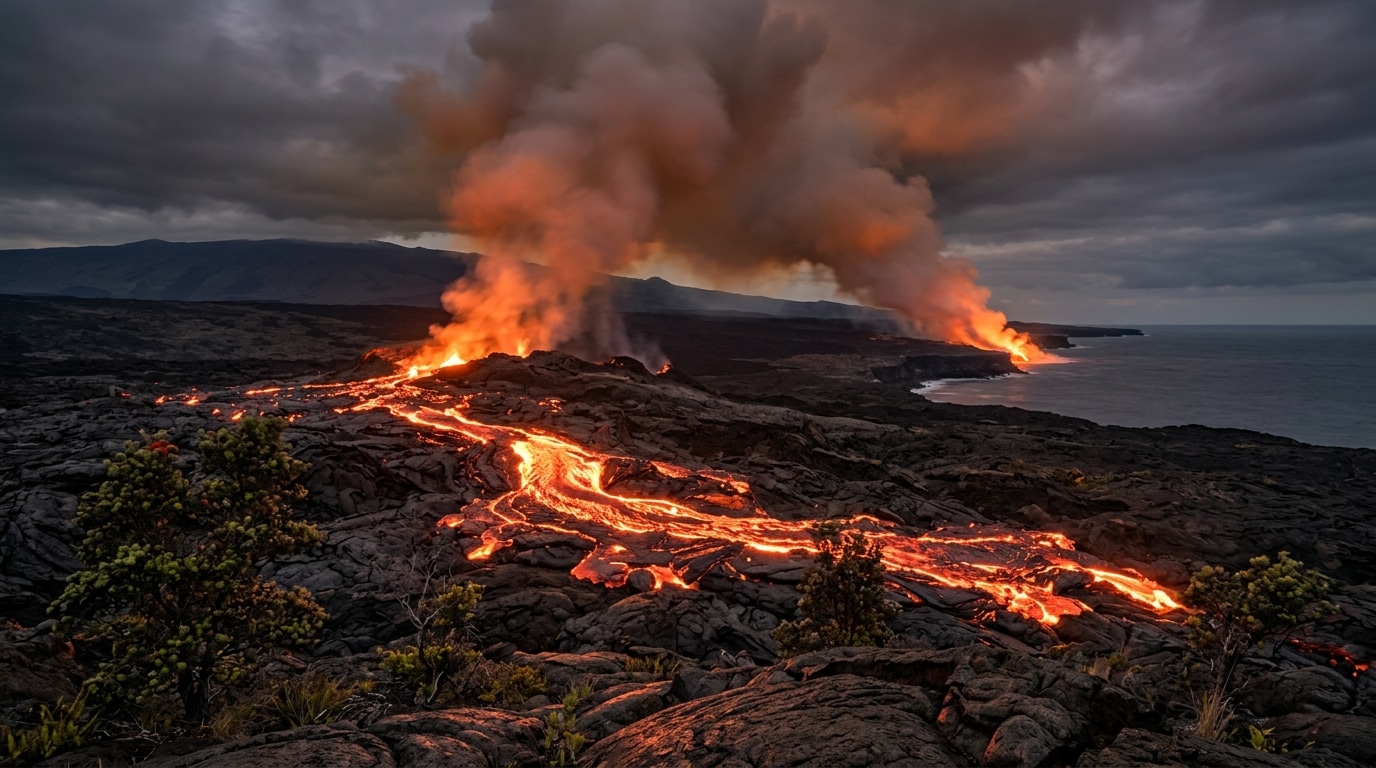
Kīlauea is among the world’s most active volcanoes, with nearly continuous eruptive activity documented since 1983 during the Puʻu ʻŌʻō eruption that lasted until 2018. That prolonged eruption fundamentally shaped the current landscape of Kīlauea’s East Rift Zone before culminating in the catastrophic 2018 events that destroyed over 700 homes in the Leilani Estates subdivision and drained the summit lava lake that had existed within Halemaʻumaʻu since 2008. Following a period of relative quiet, summit eruptions resumed in December 2020, initiating a new phase of episodic activity that continues to the present day.

1983–2018

The Puʻu ʻŌʻō eruption on the East Rift Zone represents one of the longest-duration rift zone eruptions in Kīlauea’s recorded history.

May 2018

Major lower East Rift Zone eruption begins, leading to significant lava flows through residential areas and the collapse of the summit caldera.

December 2020

Summit eruptions resume within Halemaʻumaʻu crater after more than two years of relative quiet.

2021–Present

Multiple episodic eruptions occur at the summit, including the current Episode 54 activity.

The episodic nature of recent eruptions differs from the sustained activity that characterized the Puʻu ʻŌʻō era. Each new episode typically begins with increased seismic activity and ground inflation, followed by the emergence of lava within Halemaʻumaʻu. These eruptions can last anywhere from hours to weeks, with intervening pauses during which magma continues to accumulate beneath the surface. Scientists at the Hawaiian Volcano Observatory use these patterns to better understand the magma supply system feeding Kīlauea and to refine hazard assessments for surrounding communities.

Viewing the Eruption Safely at Hawaiʻi Volcanoes National Park

Viewing the Eruption Safely at Hawaiʻi Volcanoes National Park

Hawaiʻi Volcanoes National Park remains open during the current eruption, though access to certain areas may be restricted based on volcanic and air quality conditions. The National Park Service provides updated information on which viewing areas are accessible and safe for visitors. Popular observation points include the Kīlauea Overlook, Wahinekapu, and the Uēkahuna viewing area, which offer vantage points of the active crater from a safe distance. During periods of active lava lake activity, the glow is often visible after sunset, creating memorable viewing opportunities for visitors willing to stay past dark.

Volcanic Air Quality Considerations

Kīlauea releases volcanic gases including sulfur dioxide, which can create vog (volcanic smog) affecting air quality across the Big Island and occasionally reaching neighboring islands. The National Park Service and Hawaiʻi Department of Health recommend that visitors with asthma, respiratory conditions, or heart disease limit exposure to volcanic emissions. Real-time air quality data is available through the state’s air quality monitoring network.

Visitors planning to view the eruption should prepare for variable weather conditions at the summit elevation of approximately 4,000 feet, where temperatures can be significantly cooler than coastal areas and rain is common. The park entrance fee provides access for seven consecutive days, and the Kīlauea Visitor Center offers educational exhibits, ranger programs, and current eruption information. Those arriving from the Kailua-Kona side of the island should anticipate a drive of approximately two to two and a half hours via Highway 11, the southern route that passes through the towns of Captain Cook, Kealakekua, and Ocean View before reaching the park.

Research and Monitoring of Active Hawaiian Volcanoes

Research and Monitoring of Active Hawaiian Volcanoes

Kīlauea serves as a natural laboratory for volcanological research, with scientists from the USGS, universities, and international institutions studying its behavior to improve understanding of volcanic processes worldwide. The Hawaiian Volcano Observatory, established in 1912, pioneered many techniques now used globally for volcano monitoring. Current research during Episode 54 focuses on understanding the post-2018 magma system, measuring the rate of lava effusion, and tracking how the summit caldera continues to evolve. These observations contribute to hazard assessments that help protect communities on the Big Island and inform emergency planning efforts.

Essential Information for Big Island Residents and Visitors

The current eruption is confined to the summit area within Hawaiʻi Volcanoes National Park with no current threat to nearby communities.

Air quality conditions can change rapidly due to volcanic emissions, and sensitive individuals should monitor advisories before visiting.

The Hawaiian Volcano Observatory website provides authoritative updates on eruption status and viewing conditions.

Episodic eruptions can pause and resume without warning, so visitors should check current conditions before traveling to the park.

The data collected during each eruptive episode contributes to long-term monitoring records that span more than a century at Kīlauea. This institutional knowledge helps scientists distinguish between normal fluctuations and potentially hazardous changes in volcanic behavior. Collaboration between the Hawaiian Volcano Observatory, the National Park Service, and Hawaiʻi County Civil Defense ensures that scientific findings translate into practical guidance for emergency managers and the public. As Kīlauea continues its dynamic behavior, this integrated approach to monitoring and communication remains essential for coexisting with one of nature’s most powerful forces.

Living with an Active Volcano on the Big Island

Living with an Active Volcano on the Big Island

Kīlauea’s Episode 54 serves as a vivid reminder that volcanic activity is an ongoing reality for the Big Island of Hawaiʻi, shaping both the physical landscape and the lives of those who call this island home. For residents of the Kona coast and communities throughout the island, awareness of volcanic hazards remains part of daily life, balanced against the profound natural beauty and cultural significance these volcanoes represent. Whether viewed as a scientific phenomenon, a spiritual presence, or simply an awe-inspiring natural spectacle, Kīlauea continues to demonstrate why Hawaiʻi’s volcanoes hold such enduring fascination for people around the world, drawing visitors to witness firsthand the ongoing creation of new land where fire meets the sea.