 By
By From legendary Pacific blue marlin to massive yellowfin tuna, the waters surrounding the Hawaiian Islands have produced some of the most extraordinary game fish catches in recorded history.
Hawaii’s biggest fish catches ever recorded represent more than just impressive numbers on a scale—they embody decades of sport fishing tradition in some of the most productive waters on Earth. The Hawaiian archipelago sits at the crossroads of the Pacific Ocean, where deep underwater volcanic slopes drop precipitously just miles from shore, creating ideal conditions for pelagic giants. Since the early twentieth century, anglers from around the world have traveled to these islands in pursuit of blue marlin, yellowfin tuna, and other prized species that grow to exceptional sizes in Hawaii’s warm, nutrient-rich currents. The International Game Fish Association and Hawaii state records document catches that have stood for decades, serving as benchmarks that continue to challenge modern anglers.
Pacific Blue Marlin: Hawaii’s Ultimate Big Game Prize
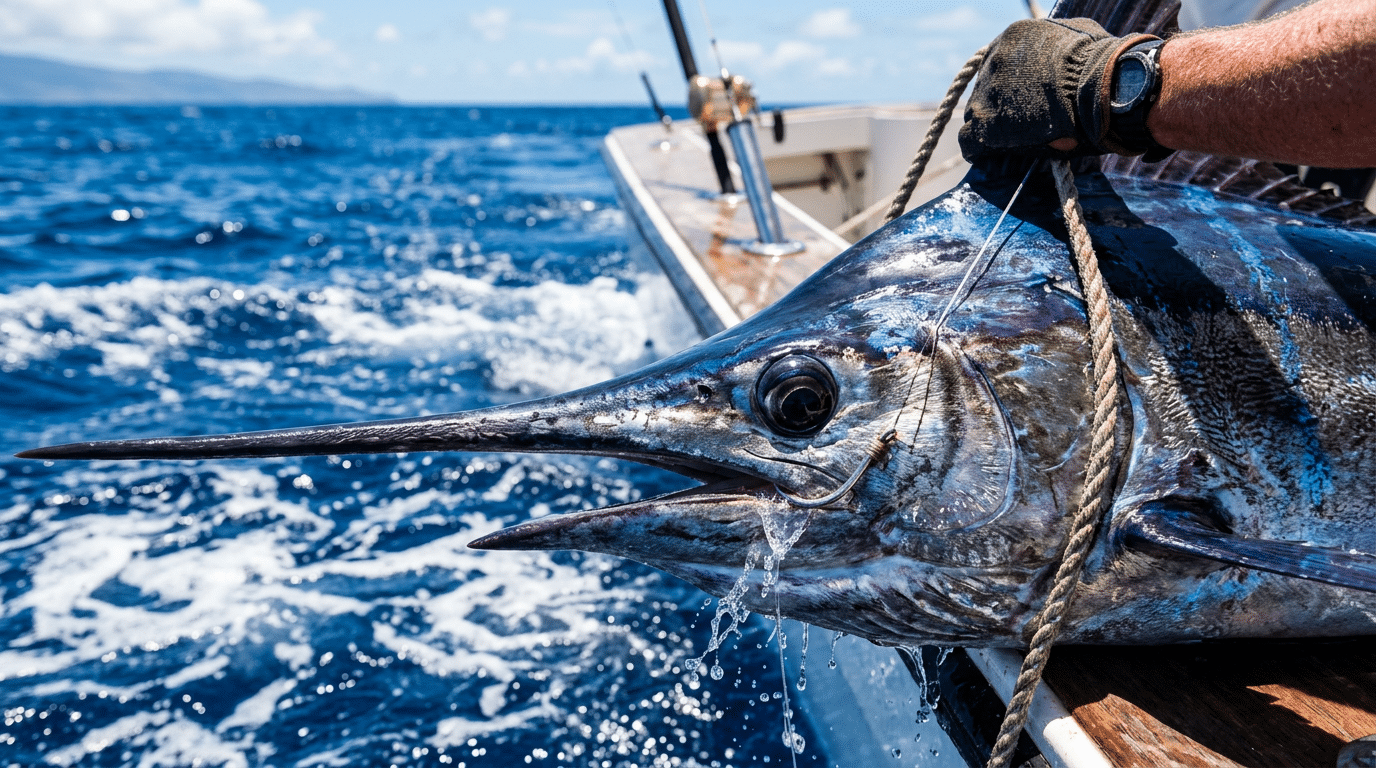
The Pacific blue marlin holds an almost mythical status among Hawaii’s sport fishing community, and the islands have produced numerous fish exceeding the coveted one-thousand-pound threshold known as a “grander.” The Hawaii state record for Pacific blue marlin stands at an astounding 1,805 pounds, caught by angler Gary Merriman off Kona, Hawaii, on May 31, 1982. This fish remains not only the state record but also held the International Game Fish Association all-tackle world record for many years. The catch occurred in the waters off the Kona Coast of the Big Island, an area renowned worldwide for its concentration of massive billfish.
Pacific Blue Marlin
1,805 lbsCaught by Gary Merriman on May 31, 1982, off Kona, Hawaii. This catch established a benchmark that has endured for over four decades and remains the official Hawaii state record recognized by the Hawaii Department of Land and Natural Resources.
The Kona Coast’s reputation as the blue marlin capital of the Pacific stems from its unique oceanographic conditions. The island’s western shoreline is protected from prevailing trade winds, creating calm fishing conditions while the ocean floor plunges to depths exceeding six thousand feet just a short distance offshore. This combination allows marlin to feed close to shore where anglers can access them. The Hawaiian International Billfish Tournament, established in 1959, has documented hundreds of granders caught in these waters over the decades, cementing Kona’s status as a premier big game fishing destination.
Yellowfin and Bigeye Tuna: The Ahi Legacy
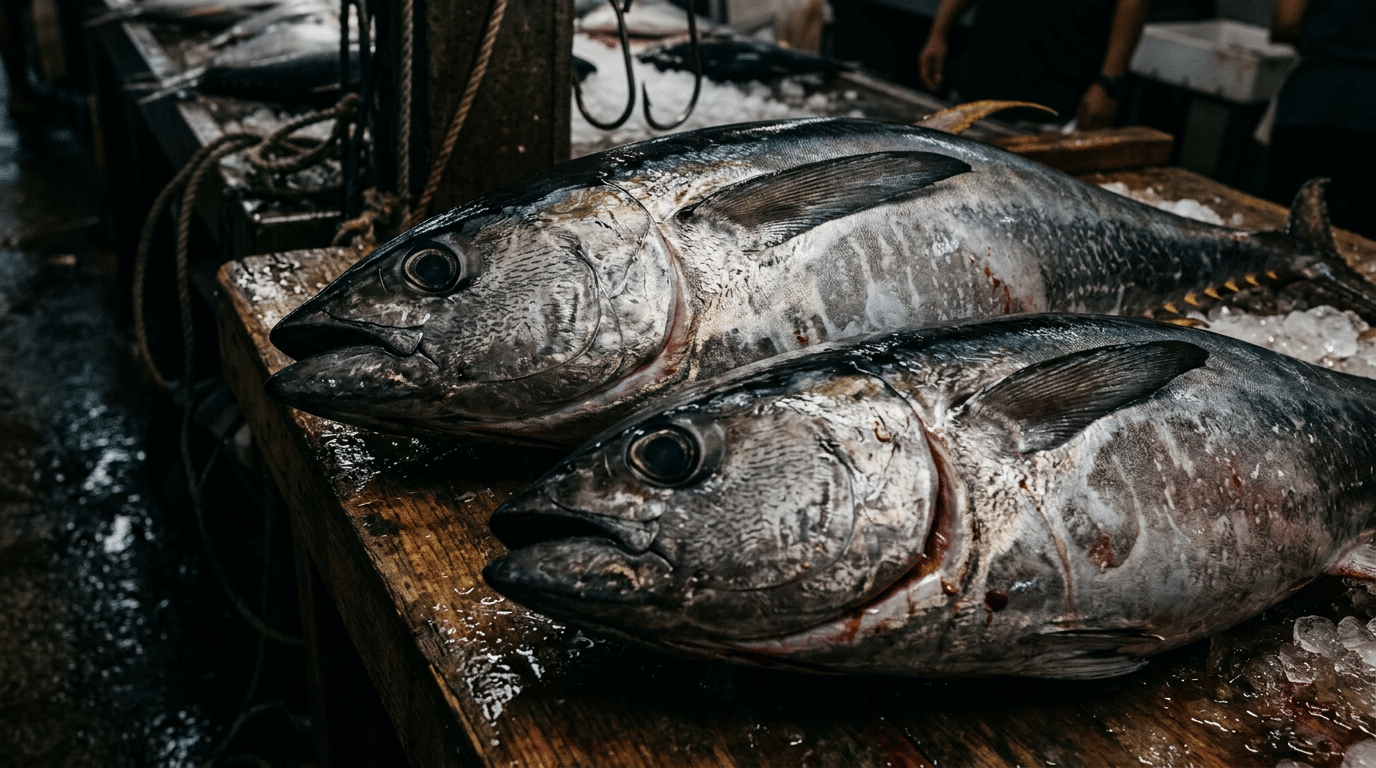
While marlin capture headlines, Hawaii’s tuna fishery has produced equally impressive catches. The Hawaii state record yellowfin tuna, locally known as ahi, weighed 325 pounds and was caught on March 18, 2019. Yellowfin tuna in Hawaiian waters benefit from the islands’ position along migratory routes and the presence of fish aggregating devices, both natural and artificial, that concentrate baitfish and the predators that follow them. Commercial and recreational fishers alike pursue these powerful fish, which are prized both for sport and for Hawaii’s renowned raw fish cuisine.
Bigeye tuna represent another significant category in Hawaii’s record books. The state record bigeye tuna tipped the scales at 371 pounds, demonstrating that Hawaii’s deep, clear waters support tuna populations that can reach exceptional sizes. Bigeye tuna typically inhabit deeper, cooler waters than their yellowfin cousins, and anglers often target them at depths of several hundred feet using specialized techniques. The Hawaiian commercial longline fleet also regularly lands bigeye exceeding two hundred pounds, though sport fishing records are maintained separately.
Official state records in Hawaii are certified through a rigorous process that requires weighing on certified scales, photographic documentation, and verification by witnesses. The Hawaii Department of Land and Natural Resources maintains these records, which are separate from but often overlap with IGFA world records. Many historic catches were weighed at harbors and fish markets using commercial scales, with records verified by tournament officials or fishery agents.
Landmark Catches in Hawaiian Fishing History
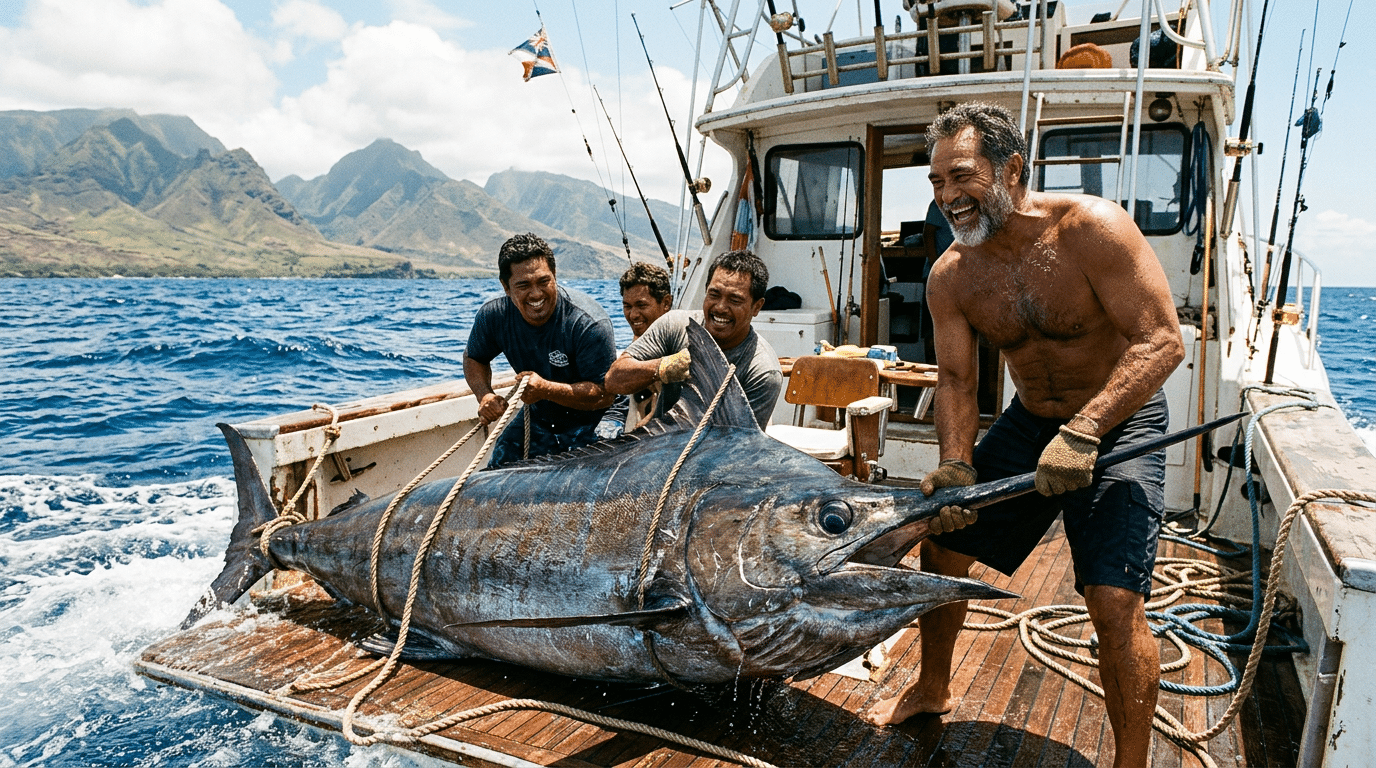
The history of record fish catches in Hawaii extends back to the early twentieth century when big game fishing began developing as a sport in the islands. The formation of the Hawaiian International Billfish Tournament in 1959 marked a turning point, bringing international attention to Hawaii’s fishing grounds and establishing standardized record-keeping practices. Throughout the 1960s and 1970s, improved fishing technology and growing interest in sport fishing led to numerous record catches being documented and verified.
Hawaiian International Billfish Tournament established in Kona, creating a formal framework for documenting and verifying trophy catches in Hawaiian waters.
Golden era of Hawaiian billfish records as improved tackle technology and growing tournament participation led to numerous documented granders.
Gary Merriman lands the 1,805-pound blue marlin that establishes the enduring Hawaii state record.
Modern conservation practices including tag-and-release have become standard, with many trophy fish now documented and released alive.
The documentation of historic catches has sometimes been complicated by varying standards over different eras. Some legendary fish from the early and mid-twentieth century were weighed under circumstances that would not meet current certification standards. Nevertheless, the verified records that exist paint a picture of Hawaiian waters as consistently productive for trophy-sized game fish across multiple species and decades.
Beyond Marlin and Tuna: Other Record Game Fish

Hawaii’s fishing records encompass far more than its most famous species. The state maintains records for dozens of fish species, from massive sharks to colorful reef fish. The shortbill spearfish, a smaller relative of the marlin, has produced state record catches exceeding one hundred pounds. Wahoo, known locally as ono, have been caught in excess of one hundred pounds, with the Hawaii state record standing as one of the largest specimens of this species caught anywhere in the Pacific.
Striped marlin, while generally smaller than their blue cousins, have been caught in Hawaii at weights exceeding two hundred pounds. The state record striped marlin weighed 224 pounds, caught in Hawaiian waters where these fish aggregate during their migrations through the Central Pacific. Mahi-mahi, another highly prized game fish in Hawaii, has a state record of approximately 82 pounds, demonstrating that even species not typically associated with extreme size can reach impressive weights in these fertile waters.
Several factors combine to make Hawaiian waters exceptionally productive for large game fish. The islands sit in the path of major Pacific currents that bring nutrients and baitfish. Steep underwater terrain provides habitat diversity, with depths exceeding one thousand fathoms found within miles of shore. Consistent water temperatures support year-round fish populations, while the isolated position of the archipelago means fish populations are somewhat protected from the intensive commercial fishing pressure found in more accessible waters.