 By
By Responsible Viewing and Manta Protection Guidelines
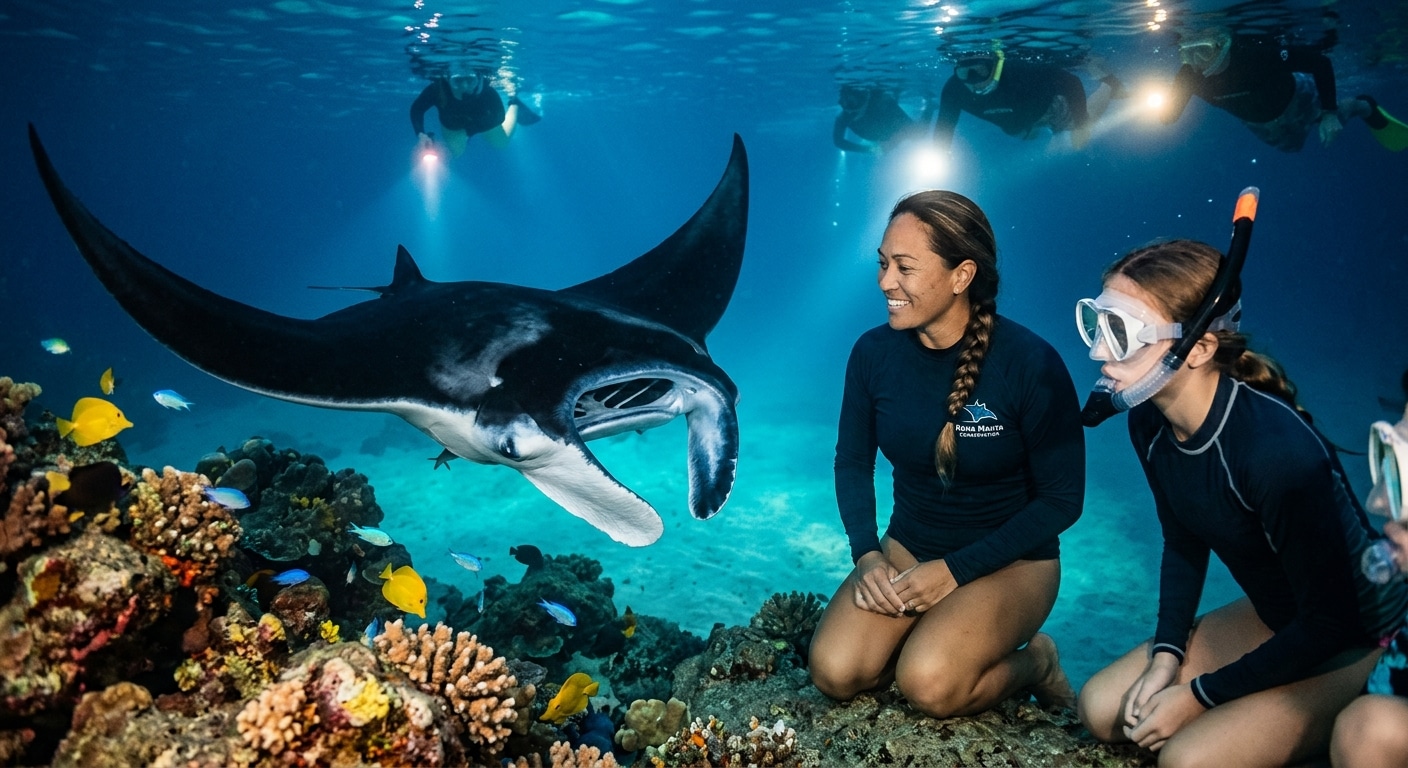
Hawaii has implemented specific regulations governing manta ray interactions. State law prohibits touching manta rays, and reputable operators emphasize a passive observation approach where participants remain stationary while mantas approach voluntarily. The animals are not fed, chased, or herded toward viewing areas. Instead, the lights create conditions that attract their natural food source, and the mantas choose to feed in these artificially concentrated plankton patches.
The concentration of multiple tour boats at popular sites has raised questions about cumulative impacts on manta behavior. Research conducted through the Manta Pacific Research Foundation and other organizations continues to monitor the local population’s health and behavior patterns. Current evidence suggests that the Kona manta population has remained stable, with some individuals regularly returning to the viewing sites over periods spanning many years. However, operators and regulators continue to evaluate best practices as the activity’s popularity grows.
An Authentic Big Island Wildlife Encounter
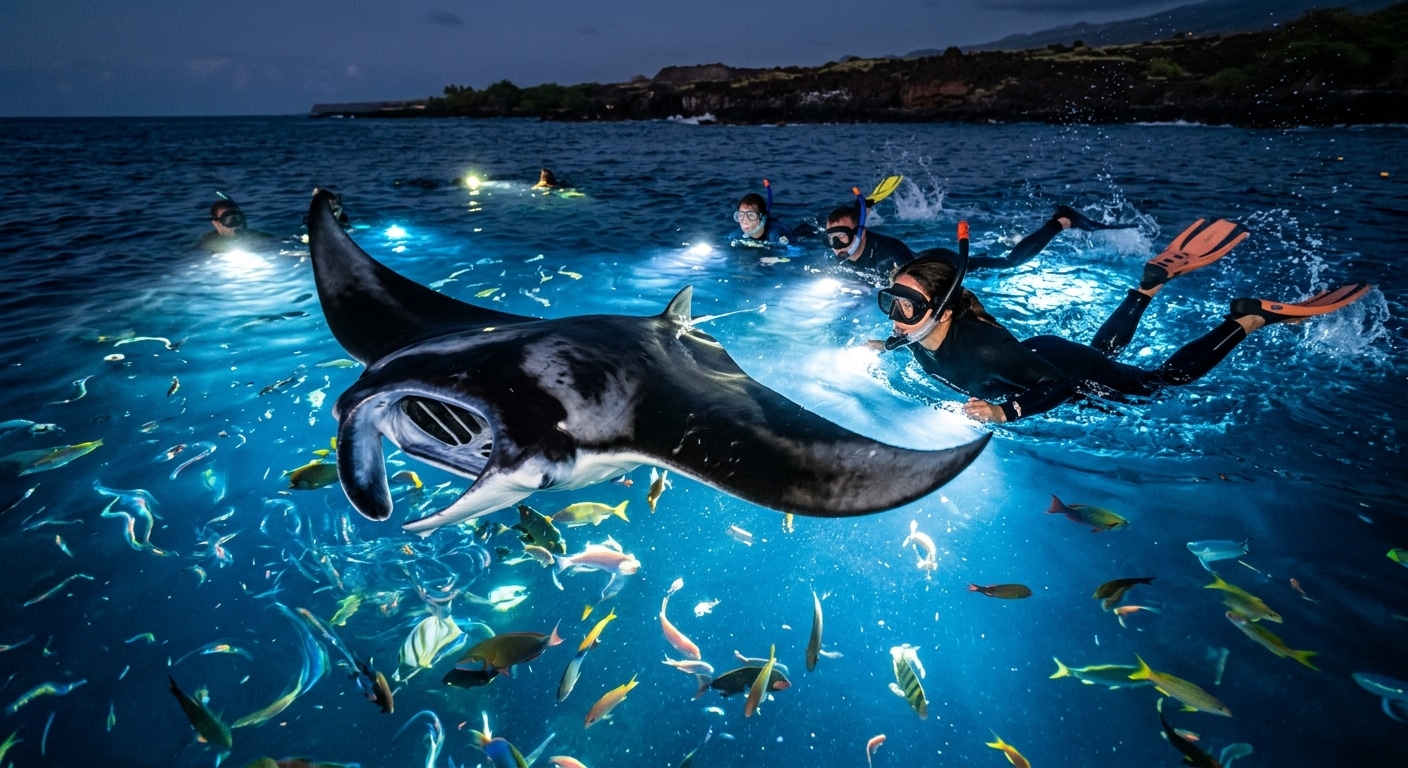
Swimming with manta rays in Kona delivers an experience unlike typical snorkeling or diving excursions. The combination of nighttime conditions, the ethereal grace of the mantas, and the close proximity these curious animals willingly approach creates genuinely memorable encounters for those comfortable in the water. Setting appropriate expectations about the physical requirements, the unpredictability inherent in wildlife viewing, and the somewhat chaotic multi-boat environment at popular sites helps visitors appreciate what they actually experience rather than measuring it against unrealistic imaginings. For many, the sight of a fifteen-foot wingspan silently gliding inches overhead, mouth agape while filtering plankton from the illuminated water column, becomes a defining memory of their time on Hawaii’s Big Island.