 By
By A Mountain Alive and Awake
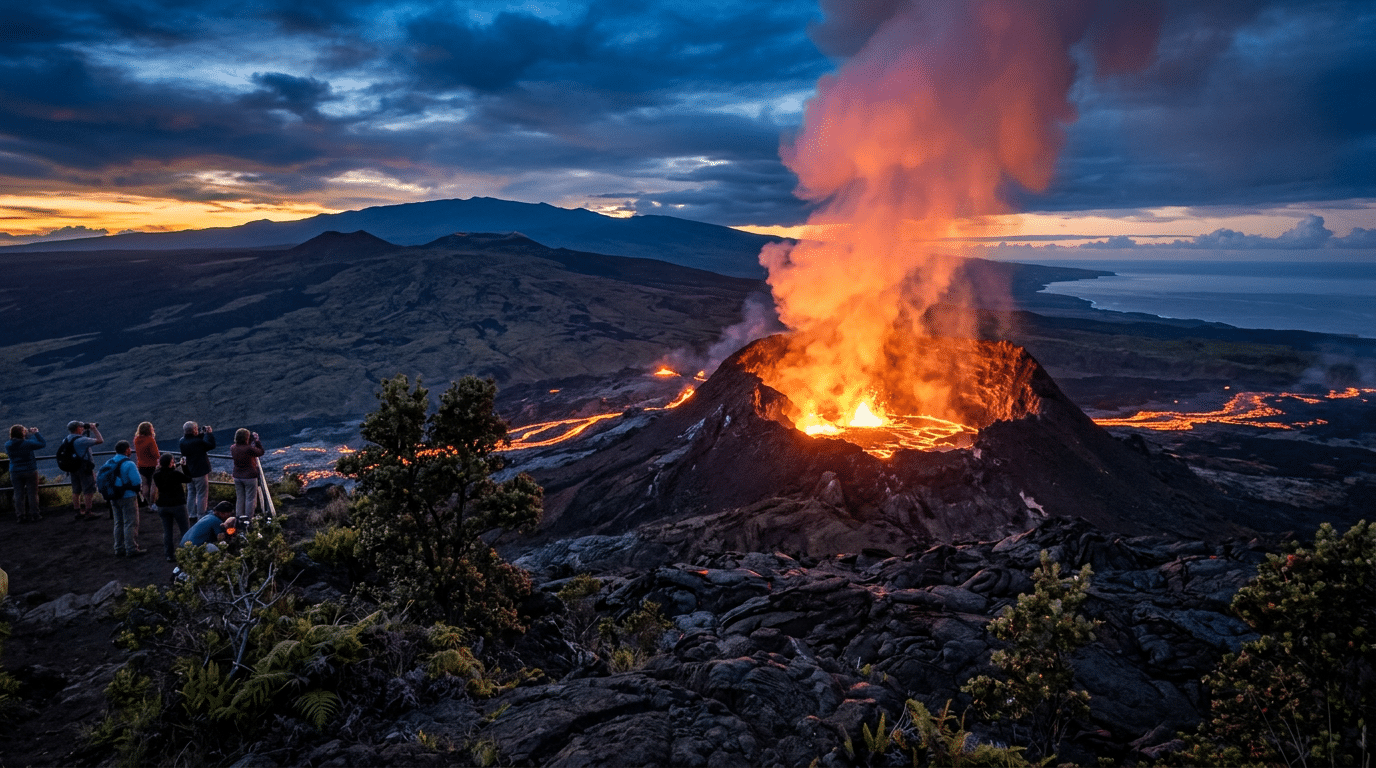
On December 23, 2024, a unique eruption began in Kīlauea’s Halemaʻumaʻu crater, with a style of activity not seen for nearly 40 years. What started in the pre-dawn darkness has grown into one of the most extraordinary volcanic spectacles Earth has produced in the modern era — and it is still very much ongoing. For travelers who have dreamed of watching molten rock reshape a landscape in real time, this moment on the Big Island of Hawaiʻi demands attention. This guide exists to give you the practical, current information you need to witness it safely, wisely, and in full appreciation of the raw geological power on display.
Since December 2024, Kīlauea has been in an episodic fountaining eruption that has set the all-time record for most fountaining episodes in a single eruption of this type. Each episode lasts hours to days: the summit fountains, pauses while it re-inflates, then begins again. The result is a volcano that behaves like a living, breathing engine — explosive and luminous one afternoon, then quiet and smoldering the next, building pressure beneath the surface until it simply cannot hold back any longer.
What Is Happening Right Now
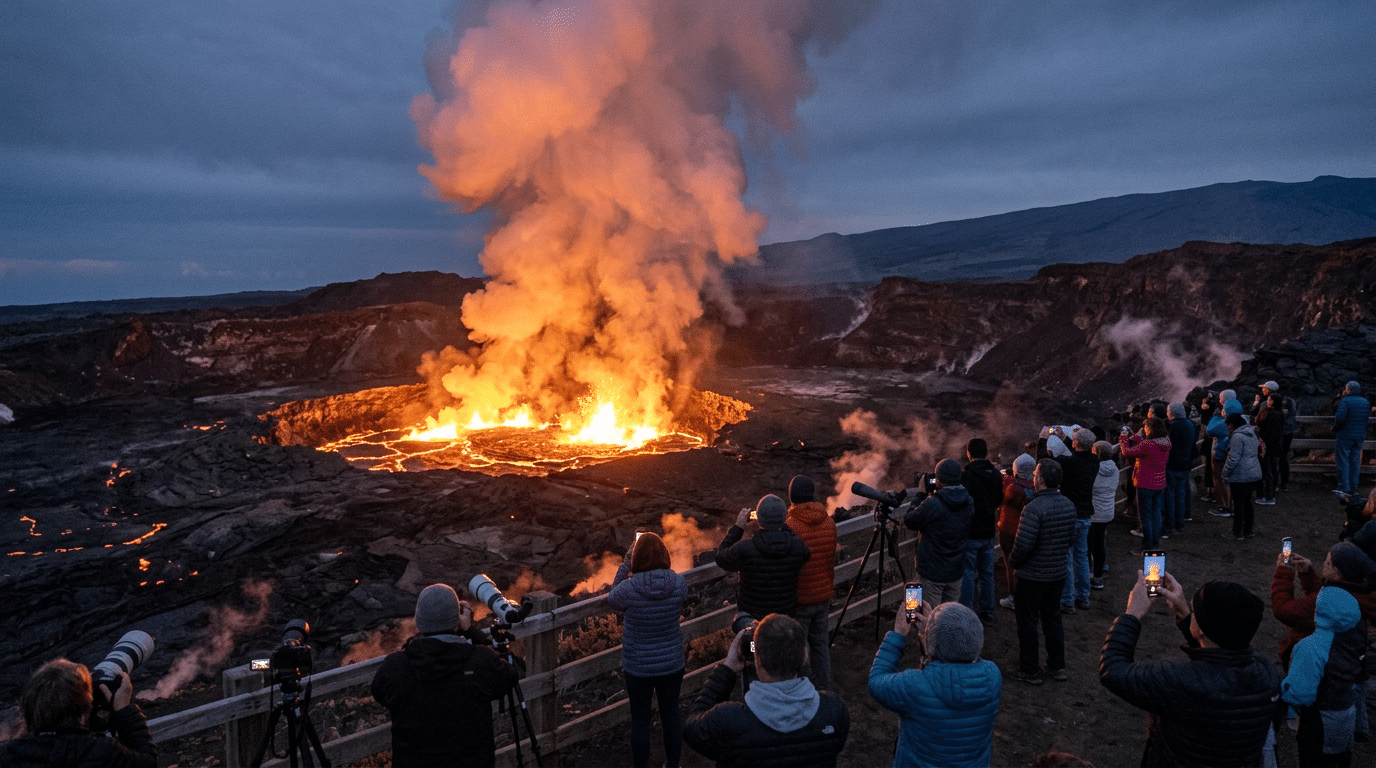
Kīlauea began erupting at about 2:20 a.m. on December 23, 2024, and it hasn’t stopped. The eruption runs in episodes: the summit fountains for hours or days, pauses while the crater re-inflates, then starts again — 54 times through mid-September 2026. To put that in perspective, Episode 48 of the ongoing Kīlauea eruption broke a record that had stood for 40 years, making this now the most episodic lava fountaining eruption ever documented on Earth, surpassing the 47 episodes of the famous Puʻuʻōʻō eruption.
The ongoing eruption quickly evolved into a sequence of forecastable short-lived but intense fountaining episodes — ranging from five to forty hours — with one-to-three-week inter-eruptive pauses. The repeated high fountaining, sometimes reaching as high as 460 meters (1,500 feet), has dramatically reshaped the landscape around Halemaʻumaʻu. As of late September 2026, Kīlauea is not fountaining but is experiencing strong glow and occasional flames at its vents, and between September 14th and 16th six new vents opened in the Halemaʻumaʻu crater, temporarily dissipating inflation pressure before crusting over.
Current status as of late September 2026: Episode 55 precursor overflows are underway and lava activity remains inside Halemaʻumaʻu crater; Kīlauea remains at WATCH/ORANGE. Always verify the current alert level at the USGS Hawaiian Volcano Observatory website (volcanoes.usgs.gov) before heading out.
Since the Halemaʻumaʻu eruption began, Kīlauea has followed a steady rhythm: magma refills a shallow chamber beneath the summit, the ground swells, and fountaining usually begins once inflation recovers the amount lost in the previous episode. Tracking that swelling with tiltmeters has allowed HVO to anticipate most episodes. However, the structural changes in September have complicated forecasting, and lava fountaining episodes are now separated by pauses of two or more weeks, with HVO tracking when Episode 55 starts with live webcams, real-time tilt data, and daily USGS updates.
A Record-Breaking Parade of Episodes
To truly grasp the scale of what Kīlauea has accomplished since late 2024, it helps to look at the cadence of recent episodes. Each entry in the table below represents a distinct eruption event — a fountaining burst that lit up the crater rim, drove park traffic to a standstill, and sent plumes of sulfur dioxide drifting across the Ka’ū district.
Recent episodes have lasted between seven and ten hours each, with fountain heights reaching up to 300 meters during Episode 50 in late June 2026. Each one sends lava fountaining from vents in Halemaʻumaʻu crater at the summit caldera, covering portions of the crater floor with fresh lava. The pauses between episodes can last anywhere from a few days to a few weeks. What makes this eruption genuinely historic is not any single episode, but the relentless rhythm of the whole — a geological metronome that has been ticking since December 2024.
Getting to the Park and What to Expect on Arrival
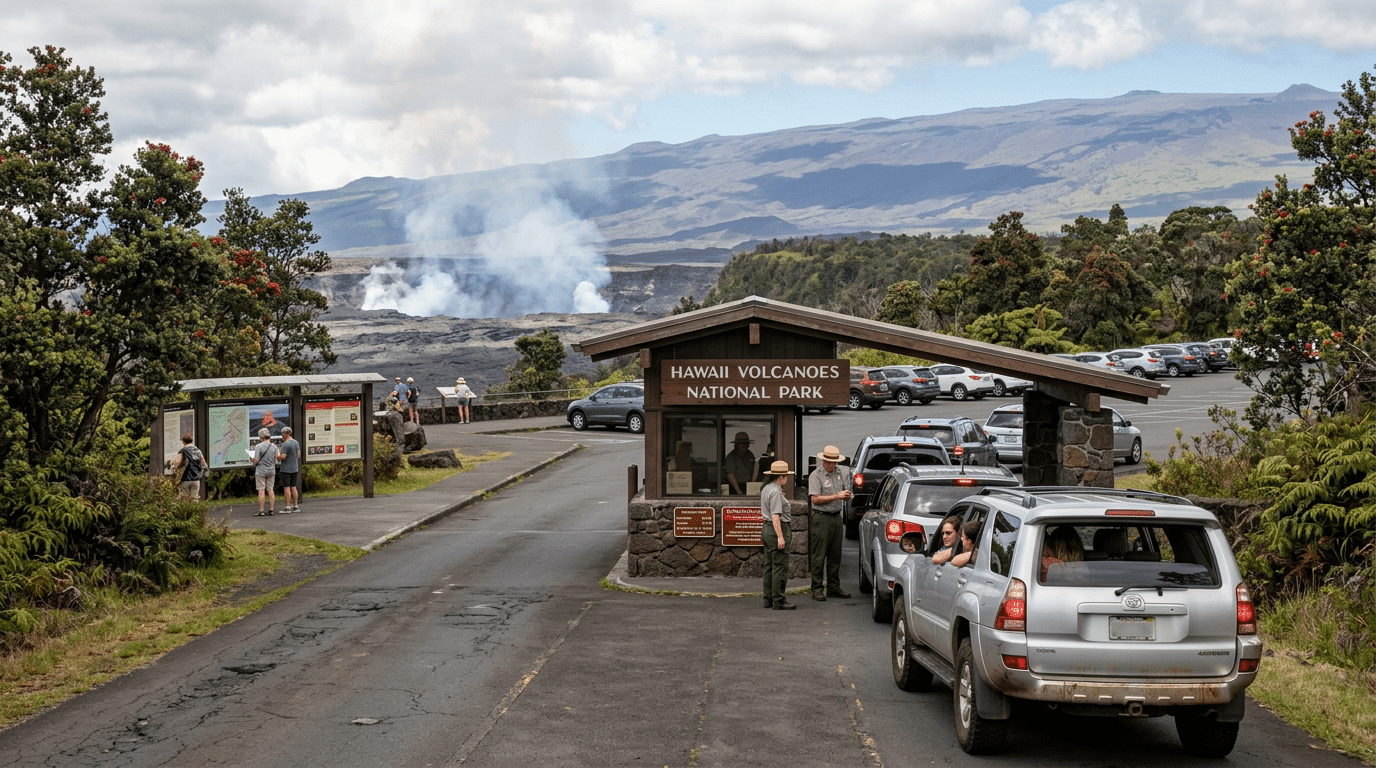
The park was established in 1916, making it one of the oldest national parks in the country, and in 1987 it was named a UNESCO World Heritage Site. Despite that pedigree, it doesn’t feel overrun. There are no gondolas, no gift-shop cities, no lines at the entrance booth — just road, rainforest, steam vents, craters, and a lot of sky. The park is open 24 hours a day, year round, which means dedicated visitors can arrive before dawn or linger long past sunset to watch the crater glow pulse against the night sky.
Come with layers. The summit sits near 4,000 feet and runs 12 to 15 degrees cooler than sea level, so it can be raining at the rim while the coast is hot and windy. Pack a rain shell, sturdy shoes, and plenty of water — conditions can shift quickly in the highland rainforest that surrounds the summit caldera.
The Kīlauea Visitor Center closed February 17, 2025 for extensive renovations. The Welcome Center is now open at Kīlauea Military Camp while renovations continue, with park rangers and the Hawaiʻi Pacific Parks Association park store available from 9 a.m. to 4:45 p.m. daily. The park store has moved 1.2 miles west to the Koa Room at Kīlauea Military Camp. Renovations are expected to take up to two years to complete.
The park also runs ranger-led programs, but it no longer publishes a schedule online: the day’s programs are announced at the Welcome Center each morning.
Entrance Fees and Passes
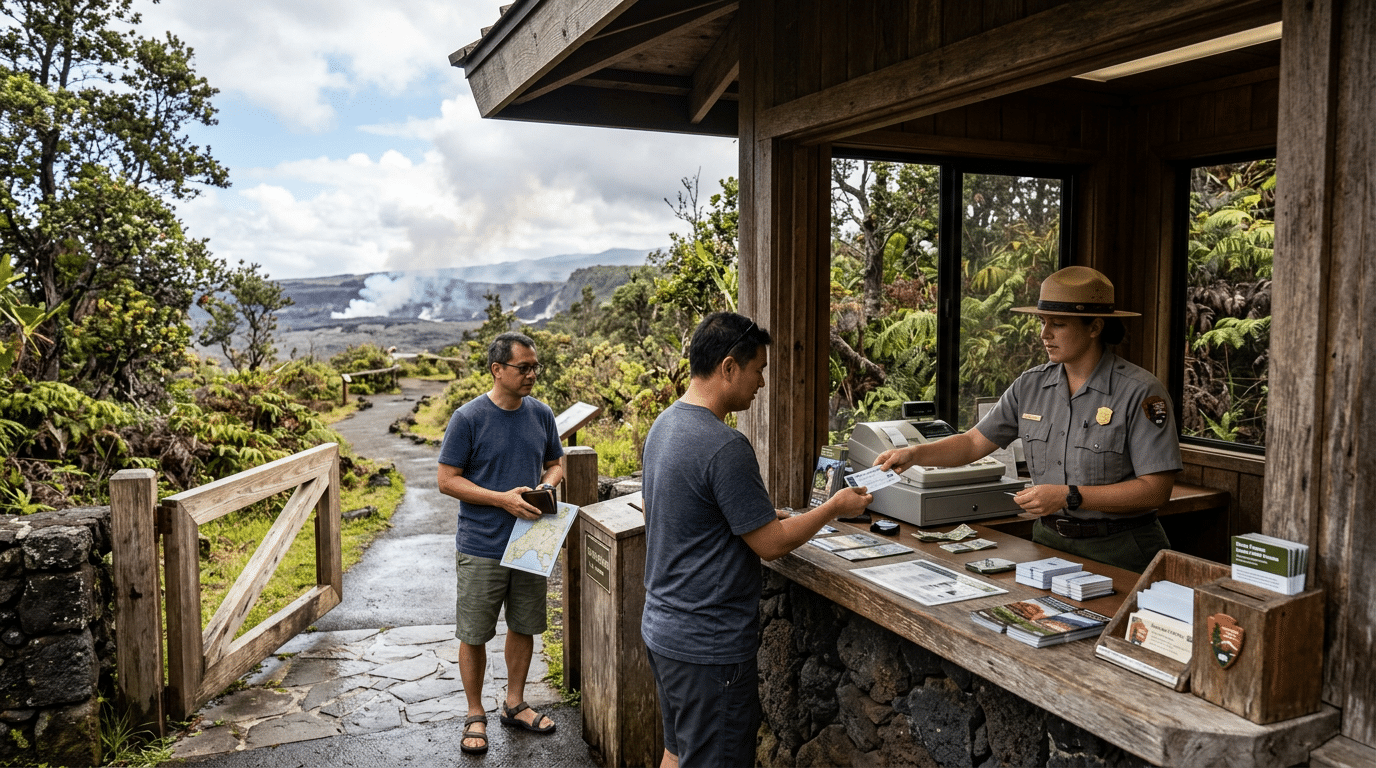
General admission is $30.00 per private non-commercial vehicle, $25.00 per motorcycle, or $15.00 for pedestrians and cyclists — keep the receipt, as it is good for seven days of entry. If you plan to visit multiple parks during your time in Hawaiʻi, an annual Hawaiʻi Tri-Park Pass costs $55, allowing unlimited entry to this park, Haleakalā National Park, and Puʻuhonua o Hōnaunau National Historical Park for a year. Discounted or free passes are available for U.S. seniors age 62 and older, active-duty military, veterans, visitors with permanent disabilities, and fourth-grade students.
| Entry Type | 2026 Fee | Valid For |
|---|---|---|
| Private Vehicle (up to 15 passengers) | $30.00 | 7 consecutive days |
| Motorcycle | $25.00 | 7 consecutive days |
| Pedestrian / Cyclist (age 16+) | $15.00 | 7 consecutive days |
| Hawaiʻi Tri-Park Annual Pass | $55.00 | 1 year, 3 parks |
| America the Beautiful Annual Pass | $80.00 | 1 year, all federal lands |
| Under 16 / Active Military / Access Pass holders | Free | Per NPS eligibility rules |
Note that the park is cashless at the entrance station, so bring a credit or debit card. Digital passes can be loaded to a mobile device before you leave your accommodation.
Where to Watch and What You Will Actually See
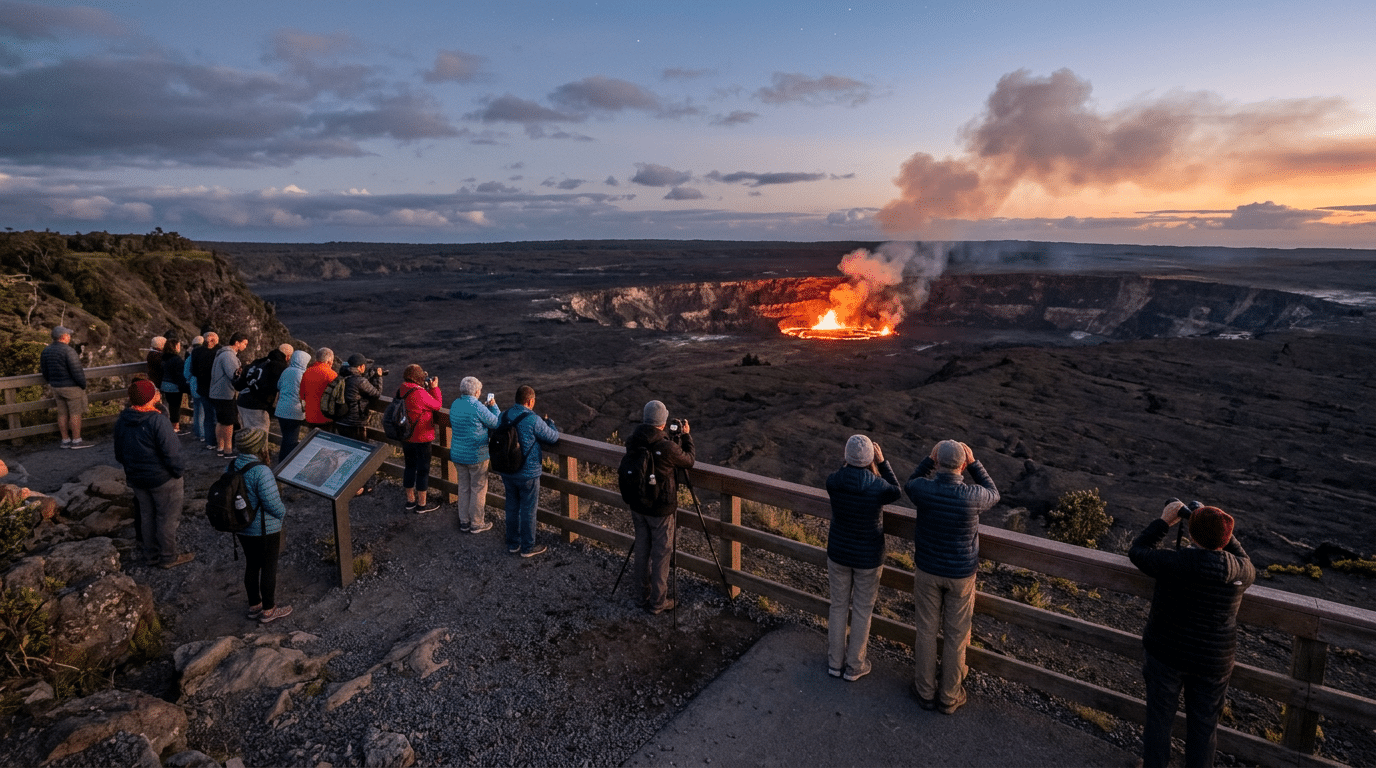
First-time visitors sometimes expect to walk up to flowing lava on the ground. The current eruption is at the summit crater, not on the flanks or coastline, so what you’re watching is lava activity inside the caldera from overlook viewpoints. The rim overlooks — particularly those on the western and northern edges of the caldera — place you close enough to feel the sulfuric air, close enough to see individual boulders of incandescent rock hurled skyward during an active episode, and close enough that binoculars transform the experience from spectacular to absolutely overwhelming.
Even between active eruption episodes, the crater glow is visible at night, volcanic gas continues to vent, and the landscape itself is extraordinary. Overnight webcam views have shown glow at both the north and south eruptive vents even during quiet periods. This makes a night visit worthwhile regardless of whether a full fountaining episode is underway.
The active eruption zone is inside Halemaʻumaʻu crater, which sits within a closed hazardous area inside the larger Kīlauea caldera. Visitors cannot enter that zone and should not try. Be sure to bring binoculars or a zoom lens. The overlooks closest to the Halemaʻumaʻu lava fountains occasionally receive ashfall and are then closed for safety, meaning you may need to view the eruption from a further distance than you anticipate.
Beyond the caldera rim, between episodes there is a full day here: the 3.3-mile Kīlauea Iki loop across a crater floor, six viewpoints on the caldera rim, and 18.8 miles of Chain of Craters Road down to the coast. Chain of Craters Road, when fully open, is one of the most jaw-dropping scenic drives in the Pacific, running from the Kīlauea summit area down almost 4,000 feet to the coast over 19 miles of twisting blacktop, passing old lava flows, pit craters, and sweeping ocean views the entire way.