 By
By Staying Safe: Vog, Tephra, and Volcanic Hazards
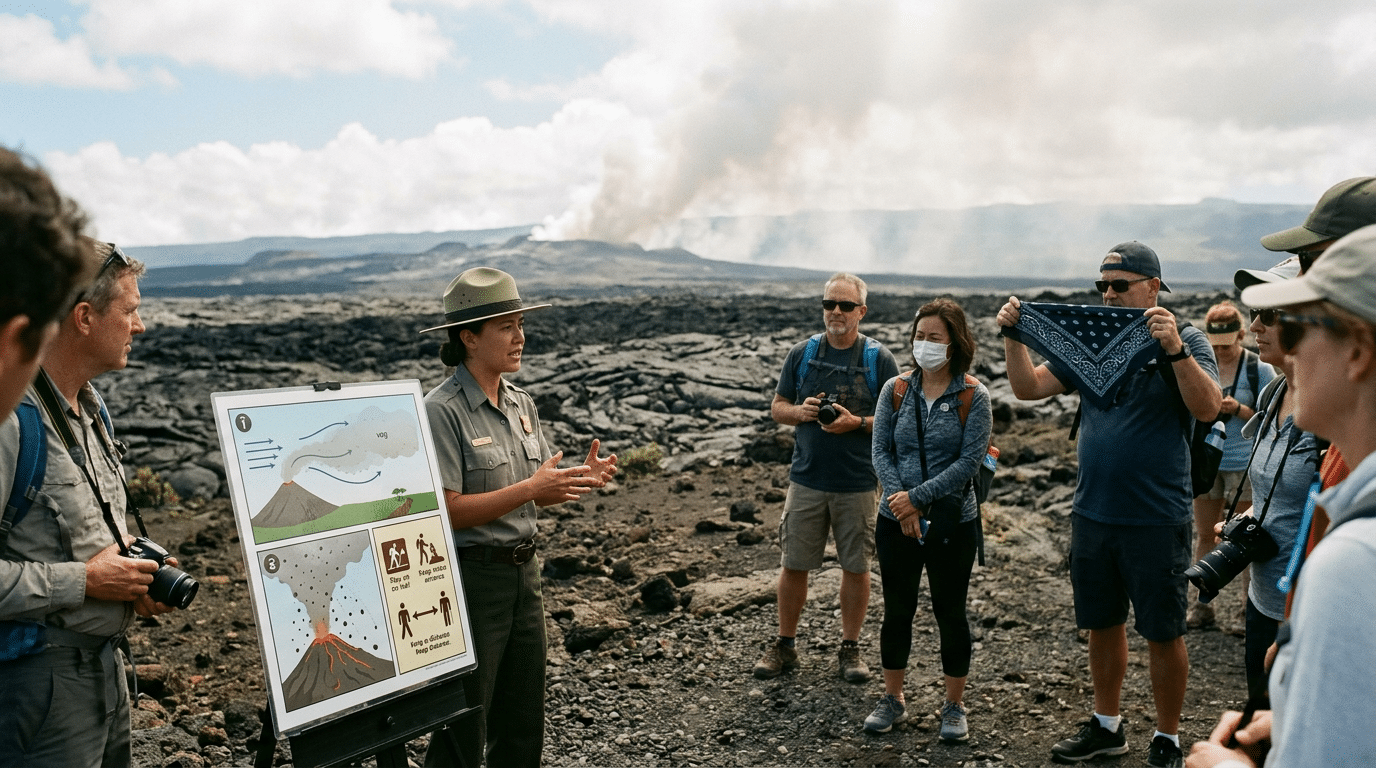
Visiting an actively erupting volcano is not a casual walk in the park in any conventional sense, and this eruption demands genuine respect for the hazards it generates. Volcanic fumes are a health risk. People with respiratory or heart conditions, pregnant women, infants, and elderly visitors should check current vog and air quality levels before visiting. The term “vog” — volcanic smog — refers to the sulfur dioxide gas and fine particulate matter that stream continuously from the summit vents, and the areas southwest of the eruption site receive the heaviest concentrations depending on wind direction.
The practical hazards for residents and visitors come from gas and volcanic particles. HVO says sulfur dioxide emissions from the summit typically range from 1,000 to 5,000 tonnes per day between episodes. During active fountaining, those numbers spike dramatically. Download the Hawaiʻi vog forecast app or check the University of Hawaiʻi’s VMAP tool before your morning departure to understand which areas will bear the brunt of gas emissions that day.
Most tephra fall from lava fountaining episodes has landed in the closed area of Hawaiʻi Volcanoes National Park, southwest of the eruptive vents. The right-map data for Episode 38 shows how inclined fountains combined with weak trade winds resulted in most tephra fall to the southwest, with circles of equidistance around the vents indicating potential impact during similar conditions. During an active high-fountaining episode, park rangers may close or open viewpoints dynamically based on real-time hazard assessments — follow their direction without hesitation.
Stay out of closed areas at all times. Rope lines and hazard signs are in place to protect you from volcanic fumes, unexpected rim collapses, and hidden cracks. During high fountaining, life-threatening hazards exist well beyond the immediately obvious perimeter, and the rapidly evolving geometry of an episodic eruption means conditions that were safe an hour ago may no longer be. Register for free USGS Volcano Notification alerts at volcanoes.usgs.gov so eruption changes reach your phone in real time.
Timing Your Visit and Managing the Crowds

During eruptions, park visitation surges, traffic increases, and parking is limited in popular areas along the caldera rim. Planning ahead and checking the park website for the best eruption viewing locations and parking tips is essential. The approach from Hilo along Highway 11 is the most direct route and tends to flow better than the longer Kona drive; seasoned visitors suggest leaving no later than 7 a.m. from Kona on any day when an episode is forecast. During eruptions, traffic can be stop-and-go several miles before the park entrance, and ongoing construction adds to the congestion entering and exiting the park.
The visitor hub near Kīlauea’s summit sits around 4,000 feet above sea level, meaning cooler temperatures, rain, wind, and low clouds can surprise visitors coming from the coast. A half day can cover the summit highlights; a full day lets you add Chain of Craters Road, Kīlauea Iki, or evening eruption viewing if lava activity is visible. If an episode is actively underway, consider staying until well after dark — the nighttime crater glow, especially when fountaining at height, is one of the most otherworldly sights available on this planet without leaving it.
Kīlauea has been one of the world’s most active volcanoes for decades, and the current eruption cycle makes 2026 a genuinely good time to visit. Check the USGS site the night before, leave Kona early, pack a lunch, and plan to stay until after dark if an episode is active. If you prefer a guided experience, a guided experience adds context that makes the landscape considerably more interesting, whether that’s geological background or Hawaiian cultural history. In 2026, Hawaii volcano tours range from approximately US$167 for a Hilo shore excursion to US$595 for a private luxury guided tour.
Current alert level: WATCH / ORANGE (as of October 1, 2026 — confirm at volcanoes.usgs.gov)
Eruption style: Episodic summit fountaining from north and south vents in Halemaʻumaʻu crater. 54 episodes completed since December 23, 2024.
Park status: Open 24 hours. Welcome Center at Kīlauea Military Camp open 9 a.m.–4:45 p.m. daily. Main visitor center closed for renovation.
Entrance fee: $30 per vehicle (7-day pass), cashless payment only.
What to bring: Binoculars, rain jacket, warm layer, N95 mask for vog, charged phone, snacks and water, headlamp for nighttime viewing.
Best advice: Check USGS status the night before, arrive early, stay late if an episode is active.
Understanding What Makes This Eruption Historically Significant
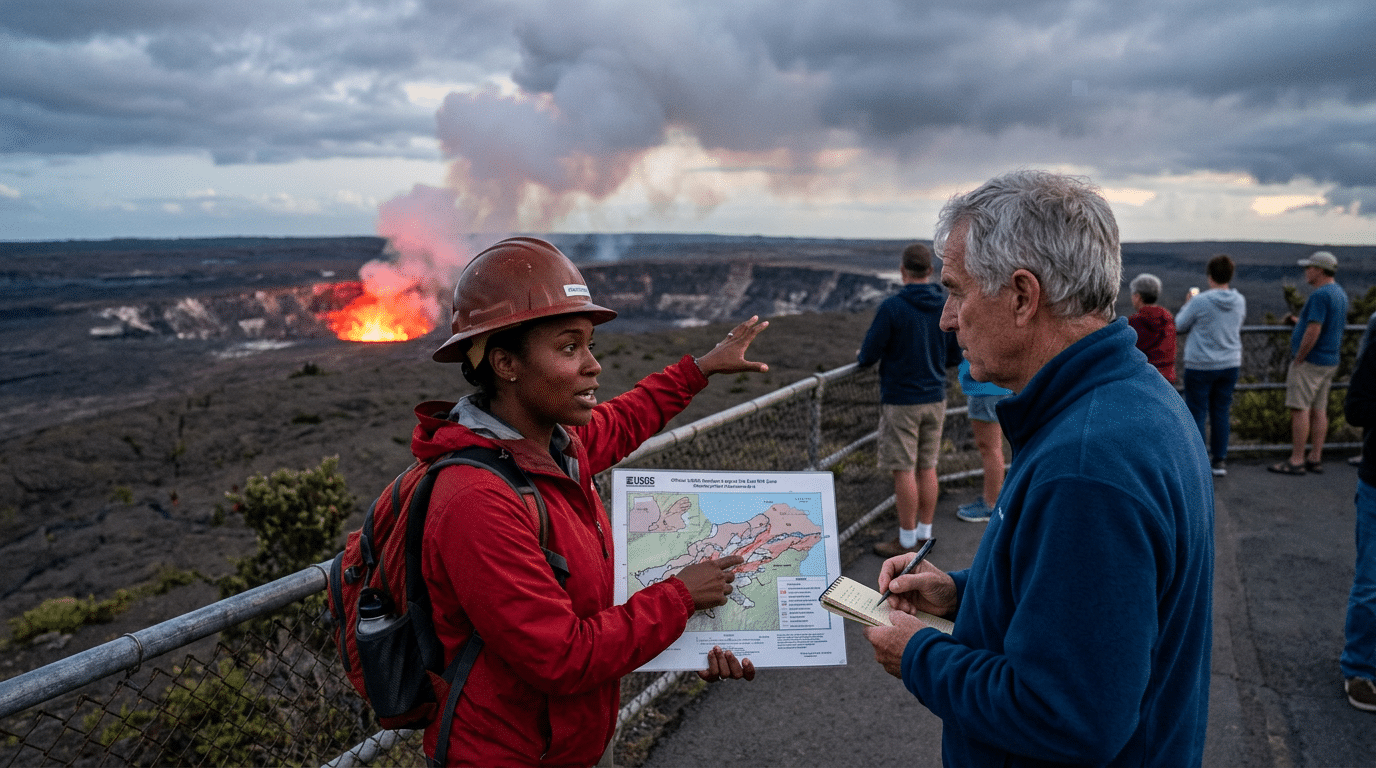
Volcanologists at the USGS Hawaiian Volcano Observatory have repeatedly emphasized that the current eruption phase at Kīlauea is unlike anything documented at this volcano in living memory. Today’s dense monitoring network, satellite observations, and real-time cameras have allowed the USGS HVO to document this eruption style in unprecedented detail, as well as provide timely forecasts. On December 23, 2024, a unique eruption began in Kīlauea’s Halemaʻumaʻu crater with a style of activity not seen for nearly 40 years, and the eruption characterized by high lava-fountaining episodes has continued for nearly a year.
Kīlauea is in a unique phase of activity in Halemaʻumaʻu, with episodes of lava fountaining erupting from two vents — north and south — since the eruption began the night of December 23, 2024. The inflationary and deflationary ground deformation associated with every lava fountain episode creates a saw-tooth pattern in tilt records since the eruption began. Scientists study that tilt record the way a cardiologist reads an EKG — each jagged rise and sudden drop tells the story of magma filling and then explosively releasing from a shallow reservoir beneath the summit caldera.
What this means for you as a visitor is that you are not simply watching a geologic curiosity. You are standing at the edge of a living laboratory where scientists are learning, in real time, how one of Earth’s most monitored volcanoes generates its power. Hawaiʻi Volcanoes National Park visitors see remarkable views, but the latest episodes also remind us how quickly hazards associated with this dynamic activity can change — a reminder that should not diminish your wonder, but should sharpen your awareness every step of the way.
The Lava Doesn’t Wait — Neither Should You
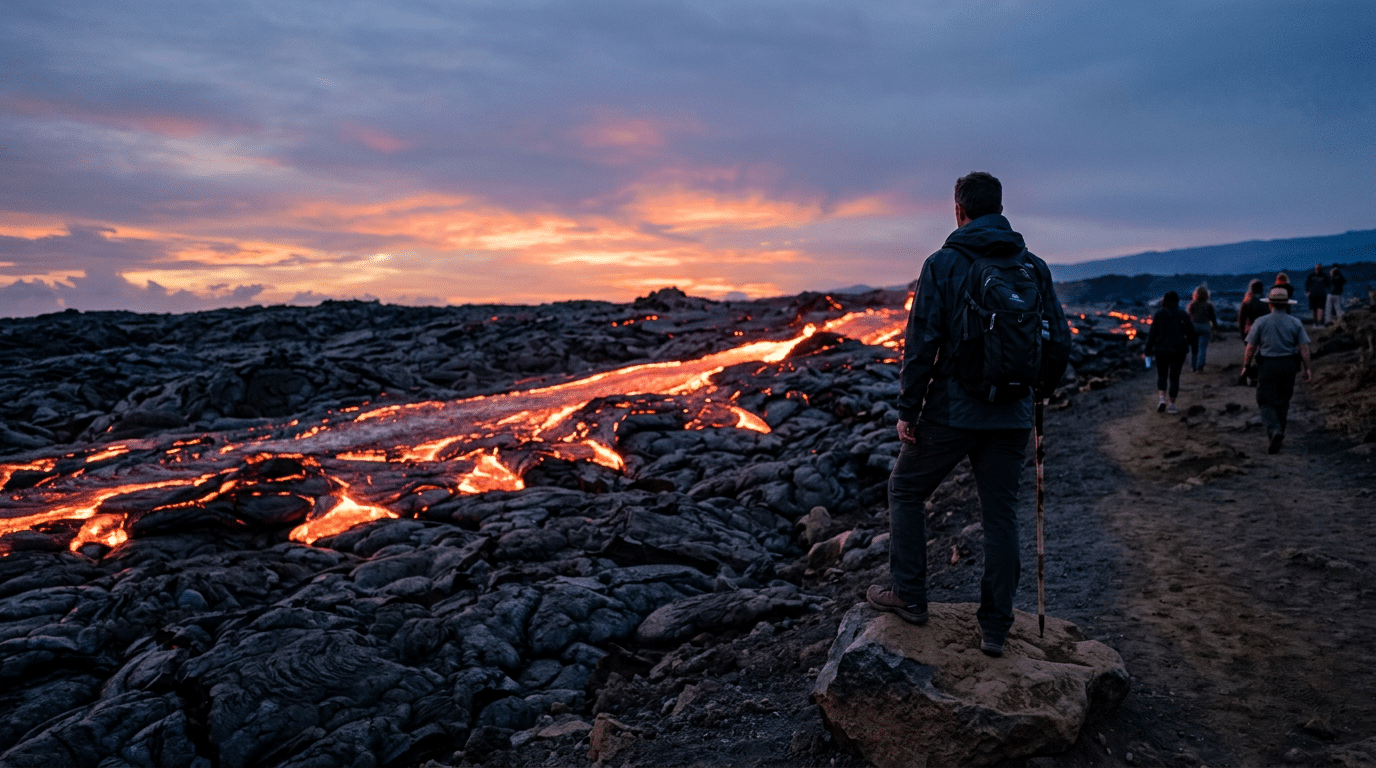
There are places on Earth that feel borrowed from another world — landscapes so elemental and so alive that standing in them reorients something deep in your understanding of scale and time. Kīlauea right now is one of those places. The ongoing episodic eruption that has defined the volcano since December 2024 is not simply a travel attraction; it is a geological event of historic proportions, and it is happening in a national park that is accessible, affordable, and open around the clock. Whether you are a first-time visitor to the Big Island or a returning traveler who thought you already knew what this island had to offer, the summit of Kīlauea in 2026 will reset your expectations entirely. Go soon, go prepared, and go with the patience to wait for the mountain to speak — because when it does, it is absolutely worth every moment of the vigil.