 By
By Seasonal Patterns and Daily Conditions for Clear Water
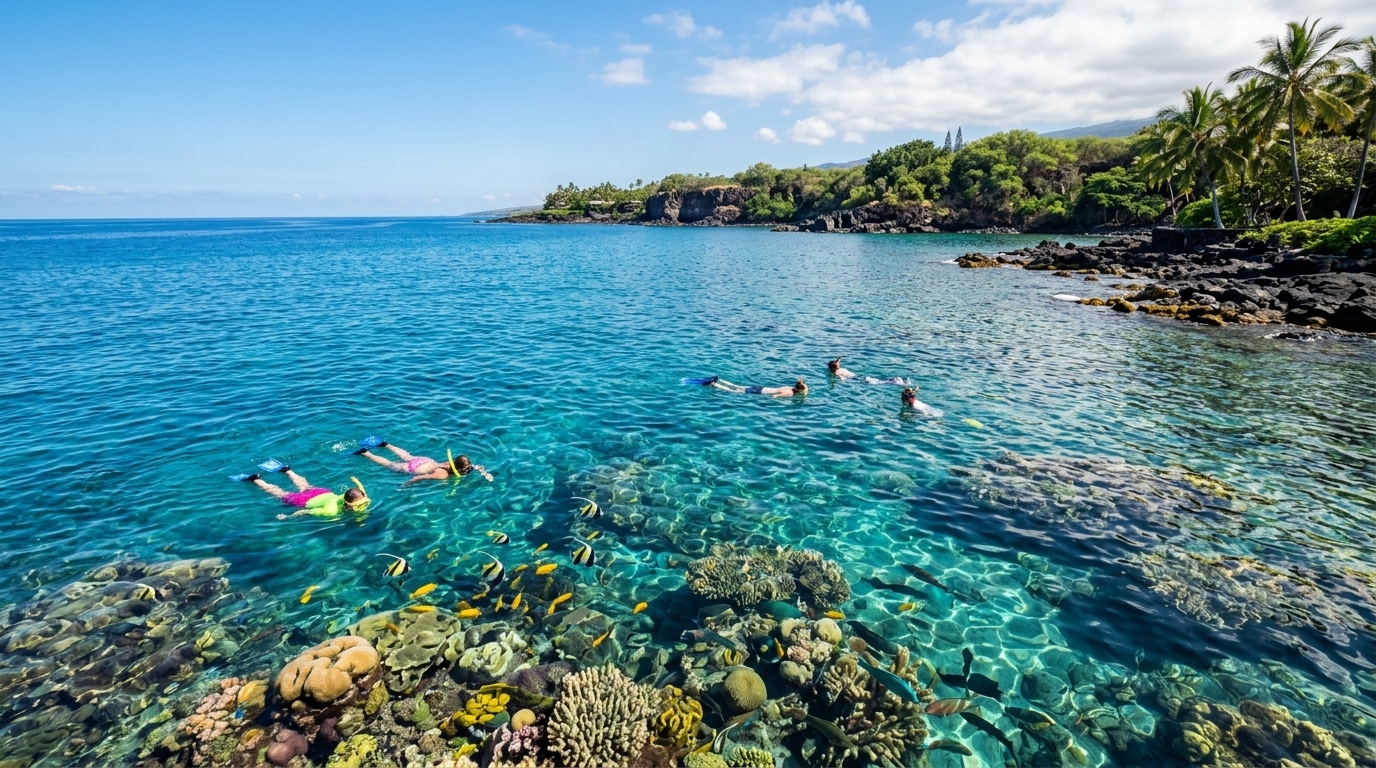
The timing of a snorkeling excursion significantly impacts water clarity and overall experience along the Kona Coast. Hawaii’s dry season, spanning roughly May through October, coincides with the calmest ocean conditions and clearest visibility. During these months, the absence of significant south swells and reduced rainfall results in minimal sediment runoff and placid surface conditions. Winter months from November through April bring occasional south and west swells that can temporarily reduce visibility and create challenging entry conditions at shore-access sites.
Daily patterns follow a predictable rhythm based on trade wind behavior. Morning hours before ten o’clock consistently offer the glassiest water conditions, as overnight calm persists before daytime heating generates onshore breezes. This morning window proves especially important during summer months when afternoon trade winds can develop quickly, stirring surface chop that reduces visibility and makes snorkeling less comfortable. Local forecasting resources including the National Weather Service Honolulu office provide surf and wind predictions that help visitors plan optimal snorkeling days.
Data source: NOAA National Ocean Service coastal monitoring
Marine Life Encounters and Responsible Snorkeling
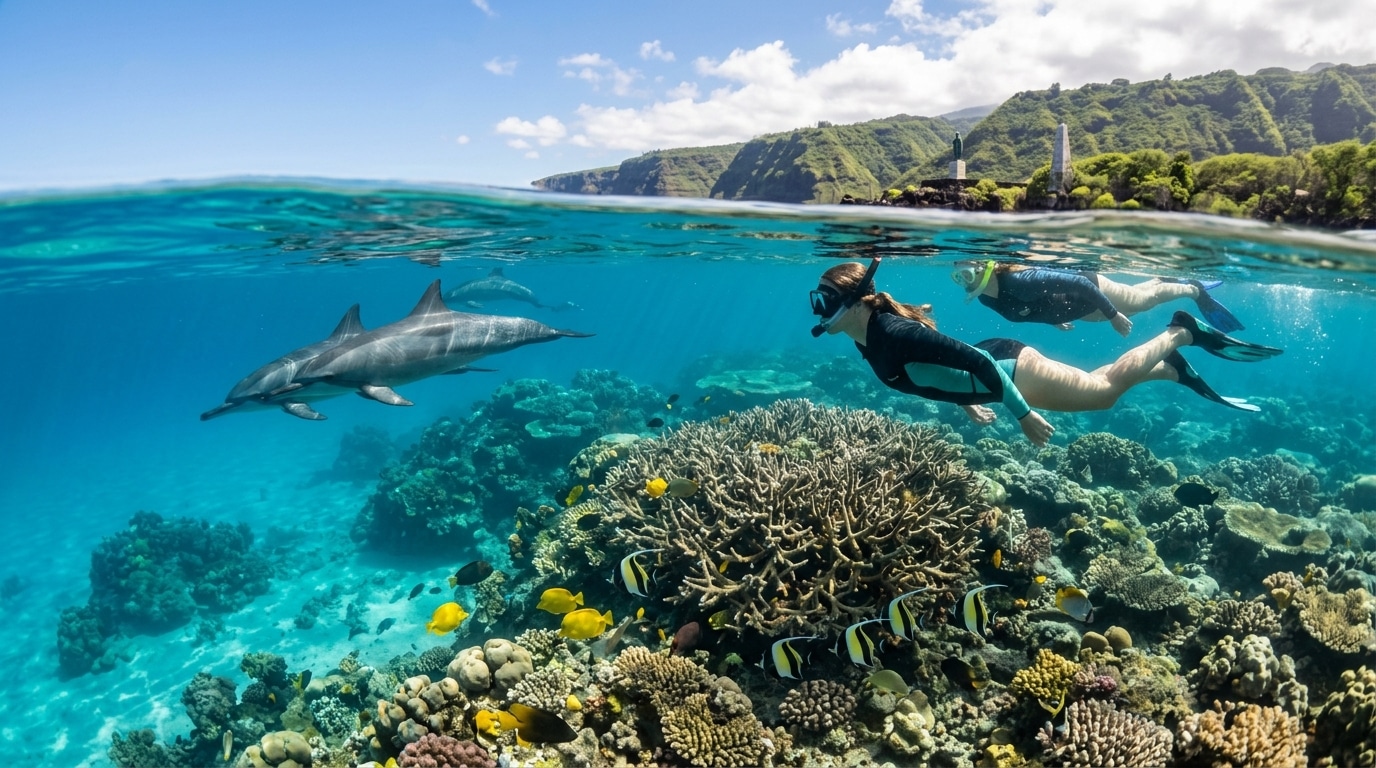
The abundance of marine life in Kona waters reflects decades of conservation efforts and the natural productivity of Hawaiian reef ecosystems. Hawaiian green sea turtles, known locally as honu, appear at virtually every snorkeling site along the coast, protected under both state and federal law. Approaching within ten feet of sea turtles is prohibited, though the animals themselves often swim close to snorkelers of their own accord. Spinner dolphins frequently rest in protected bays during morning hours, and while they are not aggressive, federal regulations require maintaining a distance of fifty yards.
Coral reef health along the Kona Coast has faced pressures from both natural events and human activity. Bleaching episodes linked to elevated water temperatures have affected some reef areas, while sunscreen chemicals have been identified as contributing factors to coral stress. Hawaii state law, enacted in 2021, prohibits the sale and distribution of sunscreens containing oxybenzone and octinoxate. Visitors are encouraged to use reef-safe sunscreen alternatives or rely on rash guards and other physical sun protection to minimize chemical introduction to reef environments.
Arrive at snorkeling sites before 9:00 AM for optimal clarity and parking availability, particularly at popular locations like Kahalu’u Bay and Two Step.
Check National Weather Service marine forecasts for surf height and wind conditions before planning your excursion.
Use reef-safe sunscreen or protective clothing to comply with Hawaii law and protect coral ecosystems.
Maintain required distances from marine wildlife—ten feet from sea turtles and fifty yards from dolphins.
Planning Your Underwater Exploration of the Kona Coast
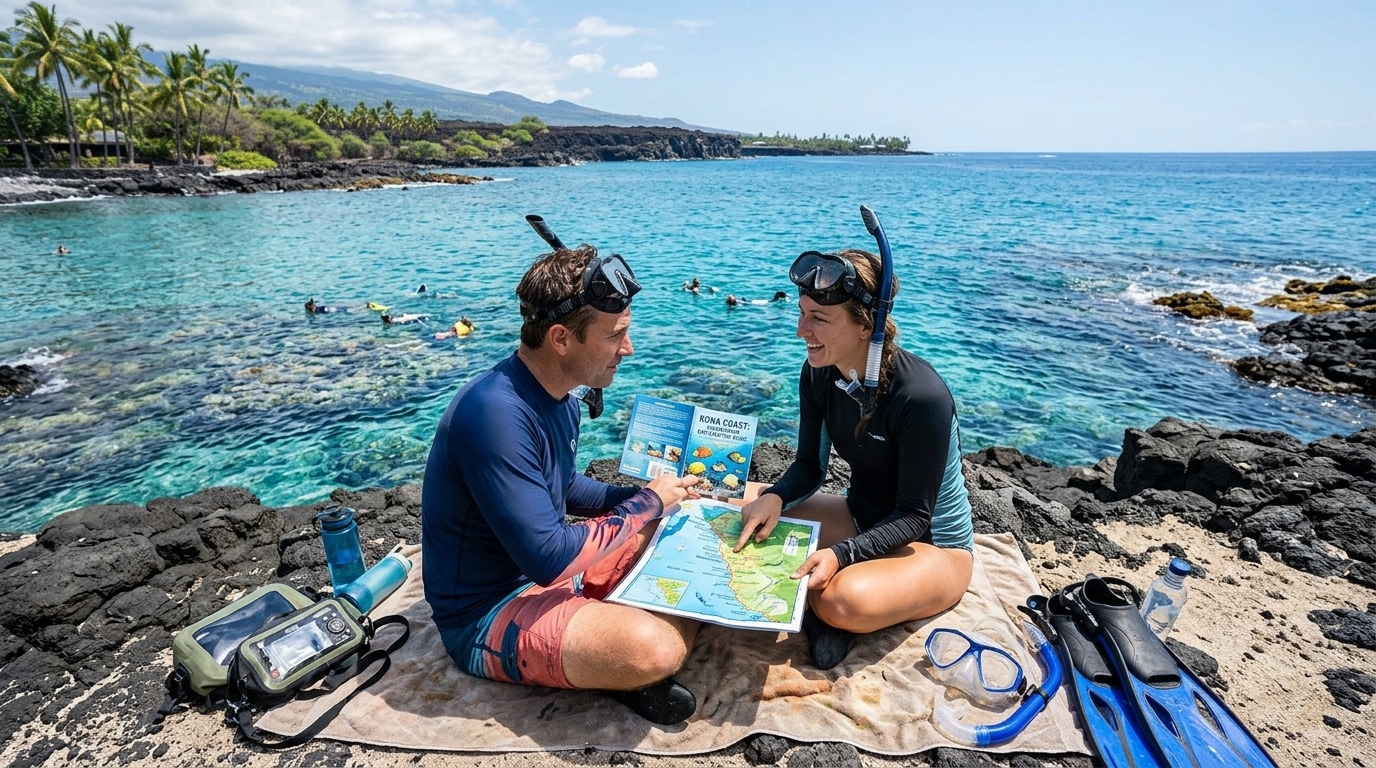
The Kona Coast’s combination of protected waters, healthy marine ecosystems, and accessible sites makes it an exceptional destination for snorkelers of all experience levels. Whether entering the water via the stepped lava rocks at Honaunau, paddling across Kealakekua Bay to the Captain Cook Monument, or wading in from the sandy shore at Kahalu’u, visitors discover underwater landscapes populated by sea turtles, colorful reef fish, and thriving coral communities. Success in finding clear water depends largely on timing—early mornings during the dry season consistently deliver the glassiest conditions—and on respecting the regulations that protect these environments for future generations. With thoughtful planning and attention to conditions, a snorkeling trip along the Kona Coast offers an unforgettable window into Hawaii’s remarkable underwater world.