 By
By 
When picturing the island of Hawaii, you might be curious about what the land is like. The greenery, the different tropical plants, vines, trees, the varying atmospheres, and the dynamic weather, the different land formations spread across this massive island are all mesmerizing sights for the mind’s eyes and the body alike to experience. Just how big is the Big Island of Hawaii? It’s actually more than 4,000 square miles and still growing daily thanks to Kilauea Volcano on the island’s southeastern coast. The land, or the ‘āina, I like to refer to her as generous, nurturing, and far-reaching. From this earthly mother-like spirit, we receive aloha from her gracious precepts spread across her body. There is much to this charming homeland and country; it’s a rock of beauty in the middle of the Pacific Ocean.
Shaped by Fire: The Volcanic Wonders of Hawaii
In this reading, we’ll explore some of the amazing features of this blessed land.
Foundationally, the Island of Hawaii is the youngest amongst the chain of smaller islands. This is because it is positioned directly over the “hotspot” in the Earth’s mantle, where volcanic activity is most active, causing it to continuously grow due to eruptions from volcanoes like Mauna Loa and Kilauea. Five significant volcanoes that make up this land: Mauna Kea (the largest), Mauna Loa (the most widespread), Kohala (northern), Hualālai (which most of Kona sits on in the west side), and Kīlauea (the most active, southern). These volcanoes have all had their time creating terrain for the island. Think of how the eruptions produced lava flows that reshaped the island’s landscape over time. Those flows are part of what makes Hawaii’s geology and geography so dynamic and continually changing.
From Lava to Landscape: Understanding Hawaii’s Volcanic Origins

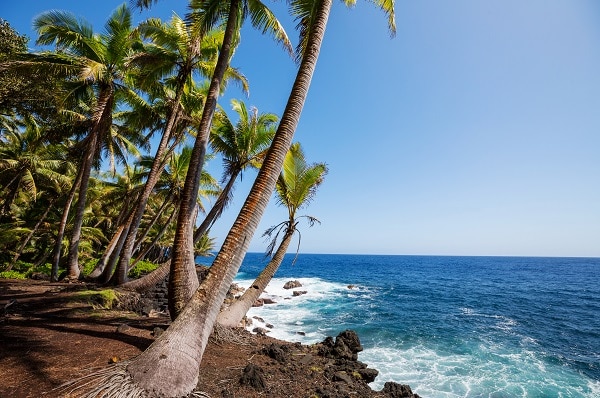
The volcanoes on Hawaii Island have created a variety of unique and stunning land features. These include vast plateaus formed by solidified flowing lava, intricate lava tubes that can be explored, and large calderas like the one at Kīlauea. The island also has fissures where lava emerges through cracks in the earth and distinctive pāhoehoe and a’a lava flows that create smooth or jagged surfaces. Coastal areas are shaped by sea arches, sea caves, and lava deltas, where lava meets the ocean and forms new land. Of course, the island’s black sand beaches are created by the erosion of volcanic rock. The towering Mauna Kea and Mauna Loa are massive shield volcanoes that define the island’s landscape. All of these features showcase the dynamic and ever-changing nature of the island’s volcanic activity.