 By
By
A dormant volcano present on the Hawaiian island, Mauna Kea has a peak of 13,803 ft. (4,207.3 m) above sea level – making the mountain the highest point across Hawaii, and only the second-highest peak for any island. Mauna Kea is approximately a million years old, which means that its active shield stage has been over for several hundreds of thousands of years. Currently, the mountain is in a post-shield state, which makes its lava more viscous and gives it a steeper profile. Moreover, late volcanism has resulted in the production of cinder cones, giving the Mauna Kea a rougher appearance compared to its neighbor volcanoes. Other factors contributing to this excessively rough appearance are the rift zone decentralization, glaciation at the peak, and weathering caused by the trade winds. Mauna Kea last saw an eruption approximately 5,000 years ago, and, presently, it is considered to be dormant. The mountain has a peak that is around 125 ft (38 m) higher than that of its massive neighbor, the Mauna Loa.
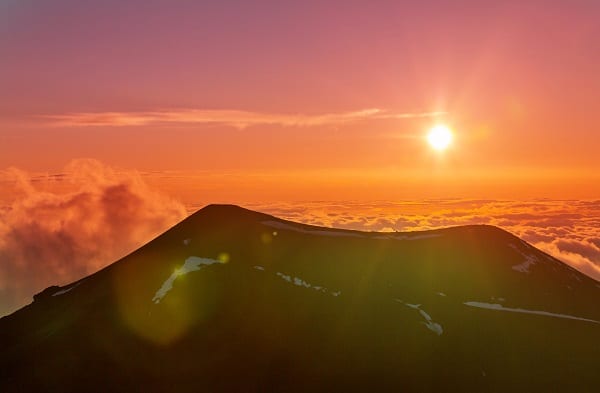
The Hawaiian religion considers all the island peaks to be sacred. As per ancient law, only ali’i having high ranks can visit the peak. The ancient Hawaiians that resided on the Mauna Kean slopes relied on the mountain’s extensive forests for their food, while volcano-glacial basalts present on the mountain’s flanks fulfilled their tool requirements. With the advent of the Europeans in the latter half of the 18th century, sheep, cattle, and other game animals were introduced. Many of these animals became untamed and started impairing the ecological balance of the volcano. Recently, a lot of concern has been expressed about the native species’ vulnerability, leading to court cases and eventually compelling the Hawaii Department of Land and Resources to remove every feral species from the volcano.
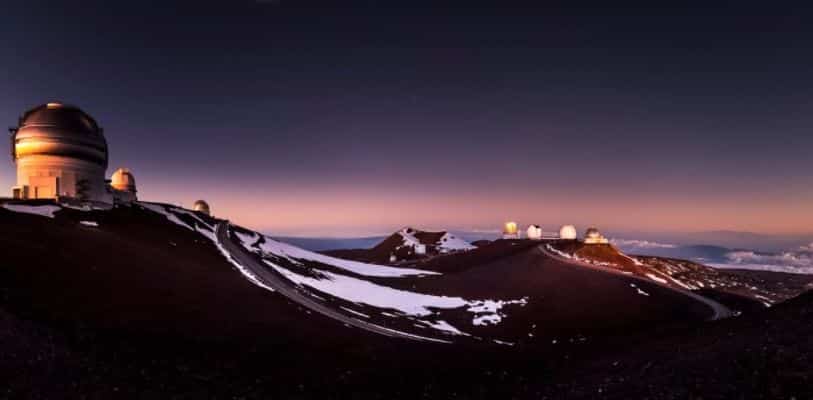
The high elevation, stable airflow, and overall dry environment make the Mauna Kea summit one of the best global choices for astronomical observers. Ever since an access road was created back in 1964, thirteen telescopes – sponsored by eleven distinct countries – have been installed at the summit. The observatories at the Mauna Kea are utilized for scientific research throughout the electromagnetic spectrum, and these observatories are considered to be the largest facility of this kind.
Recreation
The Hamakua Coast dominates the Mauna Kean coastline. The coast is a region of rugged terrain formed as a result of numerous landslides and slumps on the flank of the volcano. The region has several recreational parks, which include the Wailuku River State Park, Kalopa State Recreation Area, and Akaka Falls State Park.