Lava Watch: A Visitor’s Guide to Kilauea’s Latest Eruption
Essential information for safely experiencing Hawaii’s most active volcano during its current eruptive phase
Status: Monitoring — Check HVO for Current Conditions
Kilauea has exhibited intermittent eruptive activity in recent years. Visitors should consult the Hawaiian Volcano Observatory and Hawai’i Volcanoes National Park for real-time status before planning any visit.
Kilauea remains one of the world’s most closely monitored and frequently active volcanoes, drawing visitors from around the globe to witness its raw geological power. For those hoping to experience the Kilauea eruption 2026 activity firsthand, understanding how to navigate Hawai’i Volcanoes National Park safely and responsibly is essential. The volcano has demonstrated a pattern of episodic eruptions in recent years, with activity concentrated primarily within Halema’uma’u crater at the summit caldera. Whether lava is actively flowing during your visit depends entirely on the volcano’s current phase, making real-time monitoring resources indispensable for any traveler seeking a close encounter with this natural phenomenon.
Kilauea’s Recent Eruption History and Activity Patterns
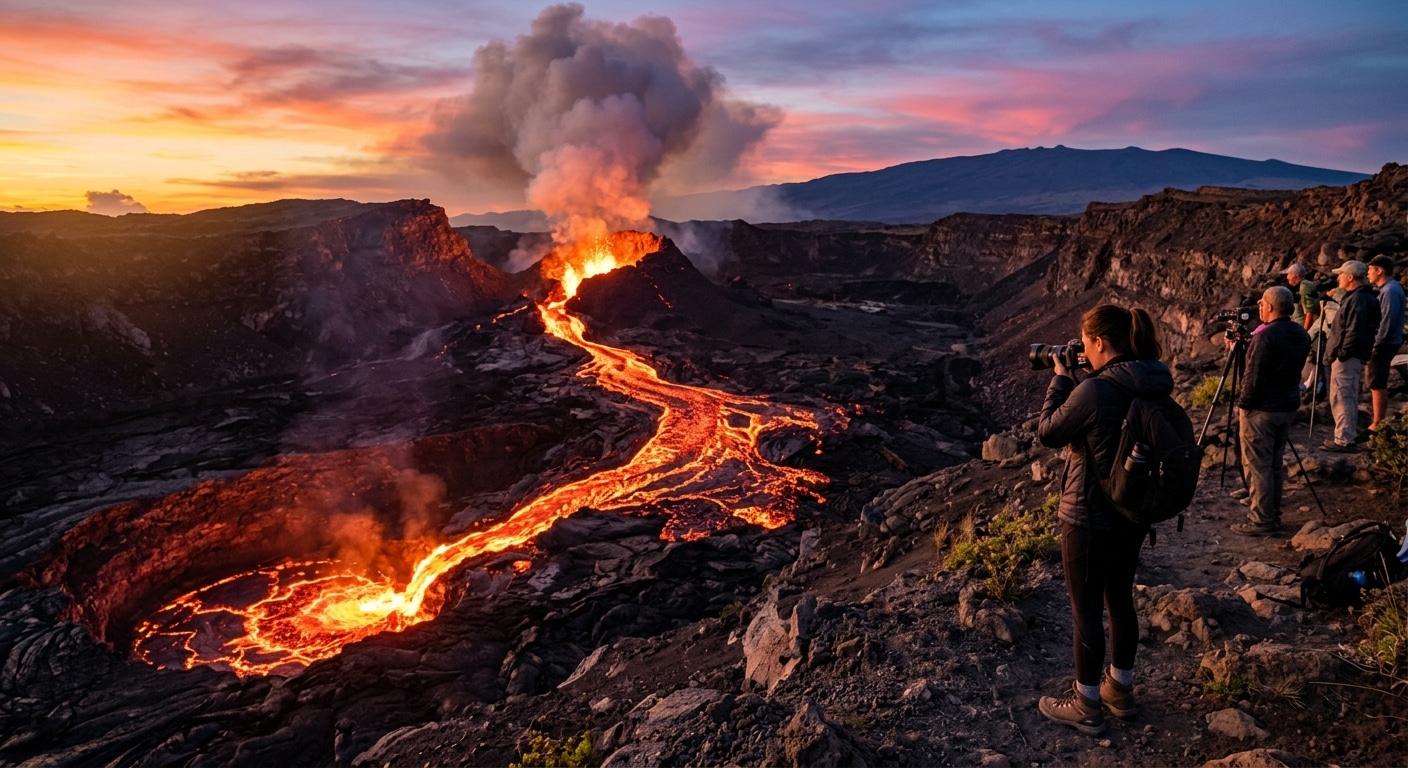
Kilauea has been in a state of heightened activity since the dramatic 2018 lower East Rift Zone eruption, which fundamentally reshaped the volcano’s summit and destroyed hundreds of homes in the Leilani Estates subdivision. Following that event, the volcano entered a period of relative quiet before resuming eruptions at Halema’uma’u crater in December 2020. Since then, Kilauea has exhibited a pattern of intermittent summit eruptions, with eruptive phases lasting from days to months, punctuated by pauses of varying duration.
The Hawaiian Volcano Observatory, operated by the United States Geological Survey, continuously monitors Kilauea using seismometers, GPS instruments, gas detectors, and webcams positioned throughout the summit and rift zones. This monitoring network provides advance warning of impending eruptions through detection of increased seismic activity, ground deformation, and changes in volcanic gas emissions. When eruptions do occur at the summit, they typically produce lava lakes and fountains within Halema’uma’u crater, visible from designated overlooks within the national park.
Kilauea Quick Facts
Accessing Hawai’i Volcanoes National Park During Active Eruptions
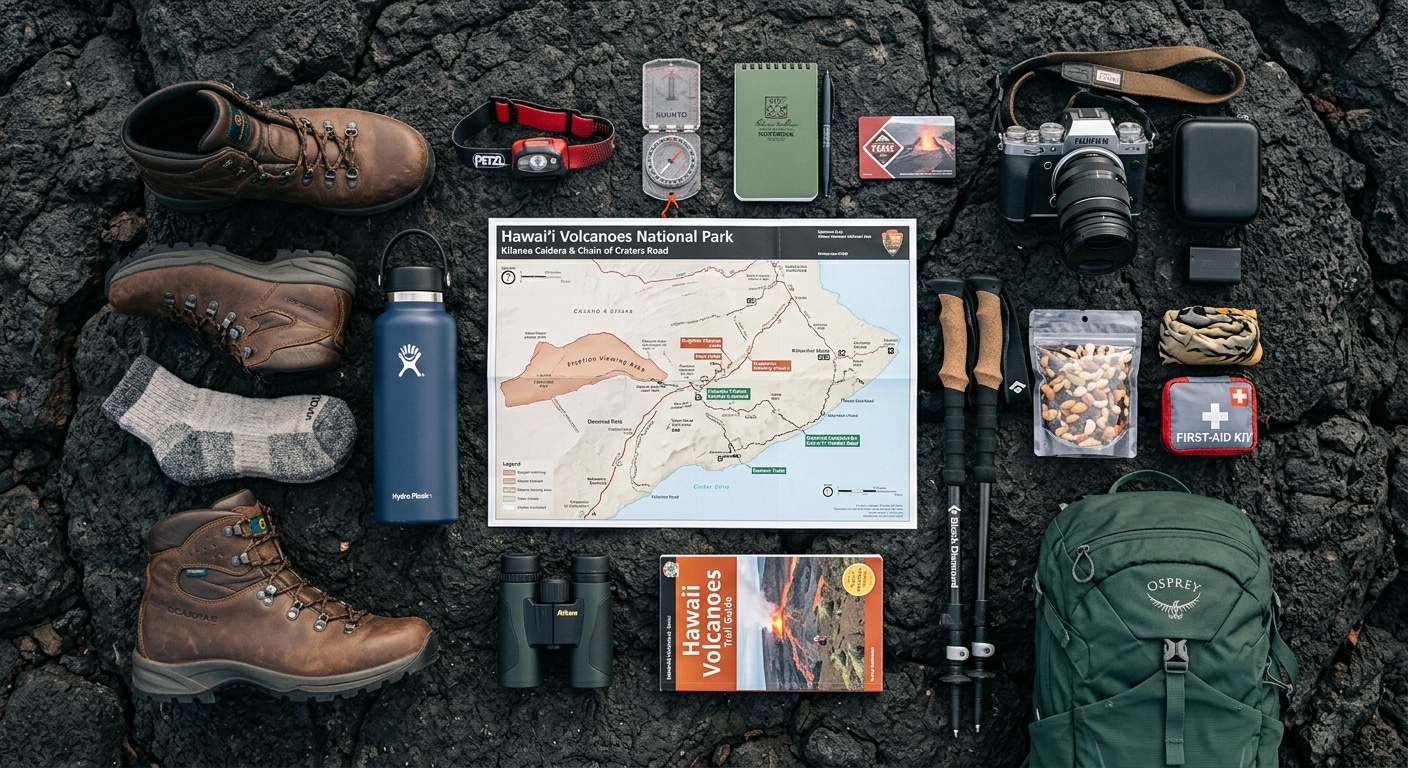
Hawai’i Volcanoes National Park remains open during most eruptive phases, though specific areas may be closed for safety reasons. The park operates 24 hours a day, year-round, with an entrance fee of $30 per vehicle valid for seven consecutive days. Visitors arriving during active eruptions should expect larger crowds, particularly at popular viewpoints around the summit caldera. The Kīlauea Visitor Center, located just inside the park entrance, serves as the primary information hub where rangers provide current eruption updates, trail conditions, and safety advisories.
The main viewing areas for summit eruptions include overlooks along Crater Rim Drive, though sections of this road closest to Halema’uma’u remain closed due to ongoing hazards from the 2018 summit collapse. The Kīlauea Overlook, Wahinekapu, and areas near the Devastation Trail provide vantage points where visitors can observe active lava during eruptions. Night viewing offers particularly dramatic scenes when the glow of molten rock illuminates volcanic gases rising from the crater, though visitors should arrive early to secure parking during periods of high volcanic activity.
Planning Your Visit
The park is approximately a 2.5-hour drive from Kailua-Kona via Highway 11 (Hawaii Belt Road). Visitors from Kona should allow extra time for the drive, particularly if planning an evening visit. The summit area sits at approximately 4,000 feet elevation, where temperatures are noticeably cooler than at sea level, so bringing layers is advisable.
Volcanic Air Quality and Health Considerations for Visitors
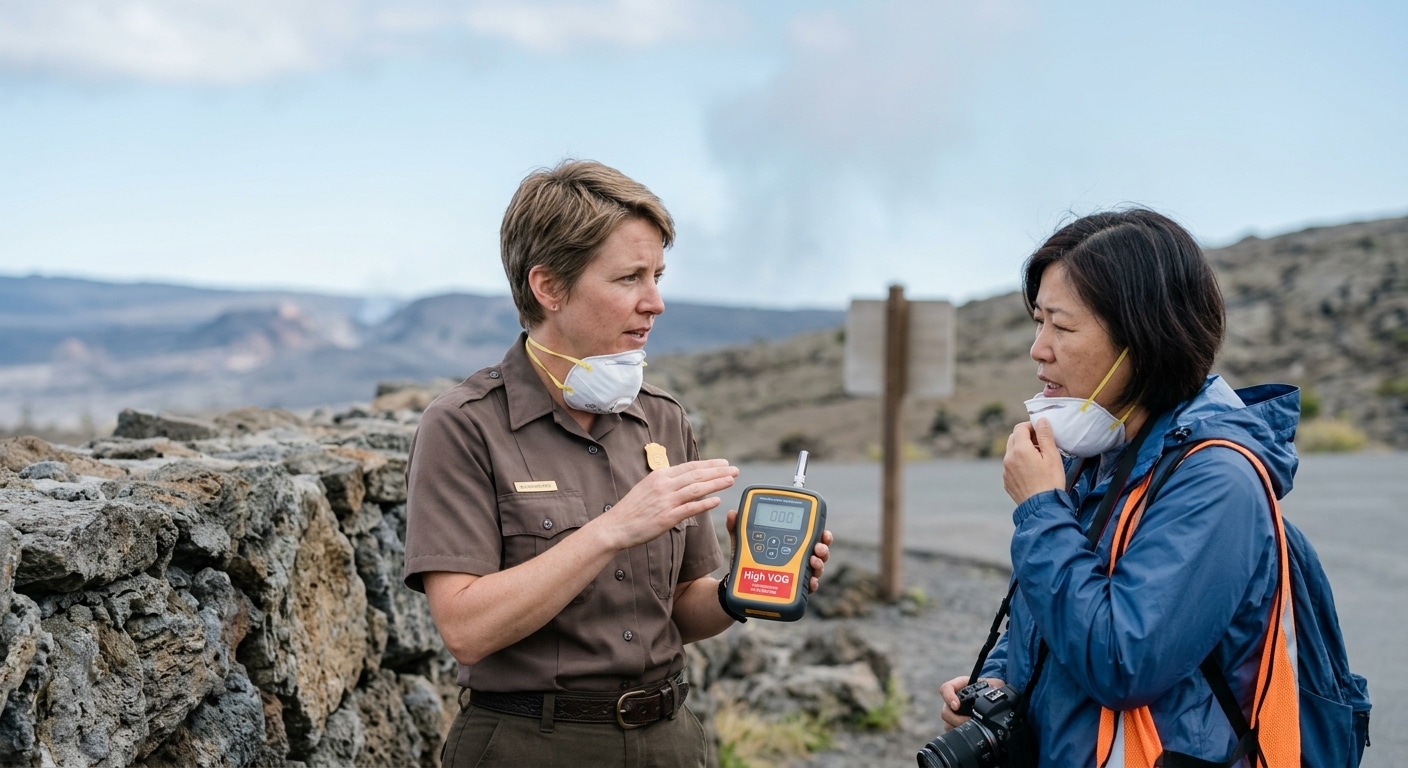
Volcanic emissions present the primary health hazard for visitors to Kilauea during eruptions. The volcano releases sulfur dioxide gas and fine particulate matter, which combine with moisture and oxygen in the atmosphere to create volcanic smog, known locally as “vog.” During active eruptions, sulfur dioxide concentrations near the summit can reach levels hazardous to human health, particularly for individuals with respiratory conditions, heart disease, or other pre-existing health concerns. Pregnant women and young children are also advised to exercise caution.
The National Park Service posts air quality information at the visitor center and at trailheads throughout the summit area. When sulfur dioxide levels exceed safe thresholds, rangers may close specific overlooks or trails. Visitors experiencing symptoms such as difficulty breathing, chest tightness, or irritation of the eyes, nose, or throat should move to areas with cleaner air immediately. Those with asthma or other respiratory conditions should carry prescribed medications and consider limiting time spent in areas with elevated volcanic gas concentrations.
Best Locations for Witnessing Active Lava Flows Safely
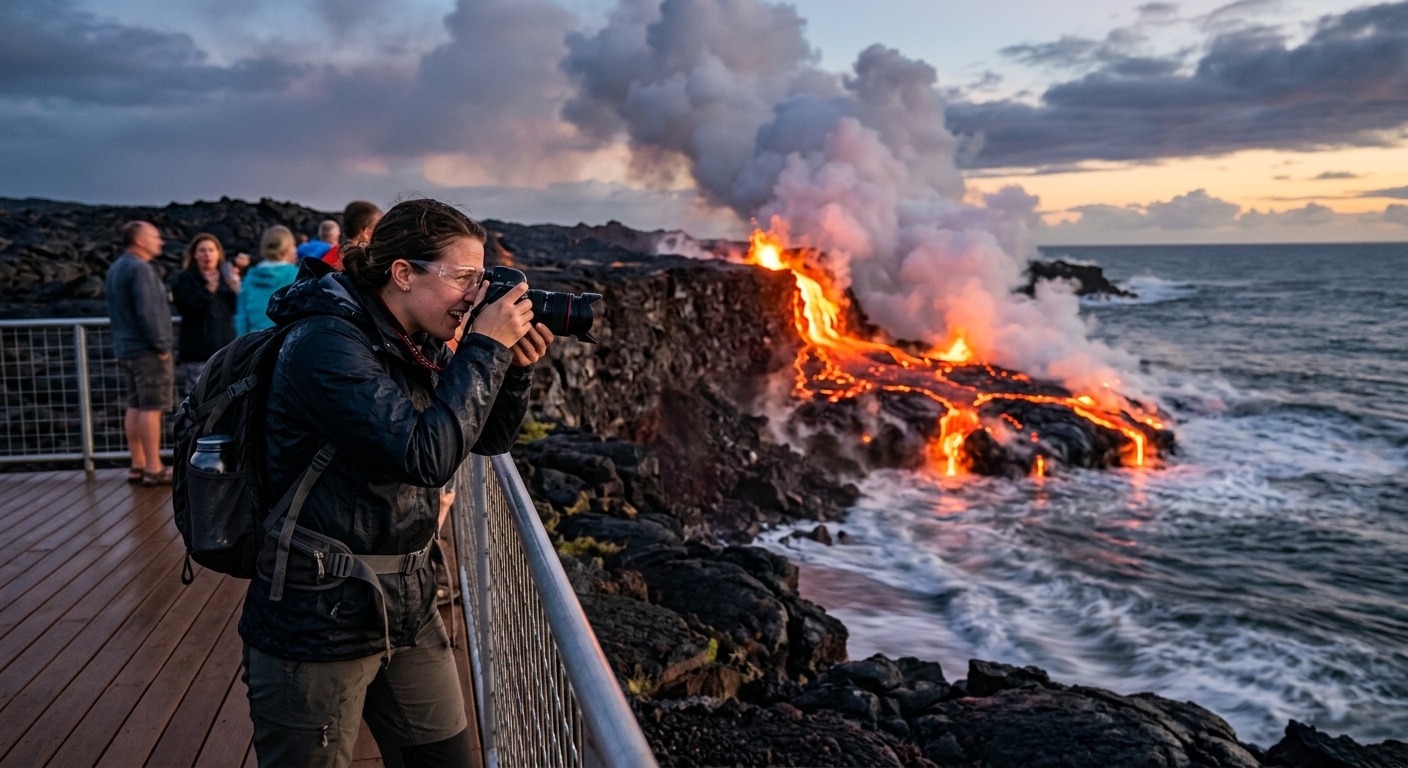
During summit eruptions, the most accessible viewing locations are concentrated along the southern and western rim of Kilauea Caldera. The park service designates specific areas as safe for public access based on current volcanic conditions, wind direction, and air quality measurements. These designated viewpoints offer unobstructed sightlines into Halema’uma’u crater while maintaining safe distances from active vents and unstable ground.
For visitors unable to view active lava in person, the Hawaiian Volcano Observatory maintains several webcams that stream live footage of the summit crater. These cameras provide real-time views of eruption activity and serve as valuable tools for planning visits around periods of visible surface activity. The park’s website and social media channels also provide regular updates on viewing conditions and any changes to accessible areas.
