 By
By Ecological Transformation and Recovery Processes
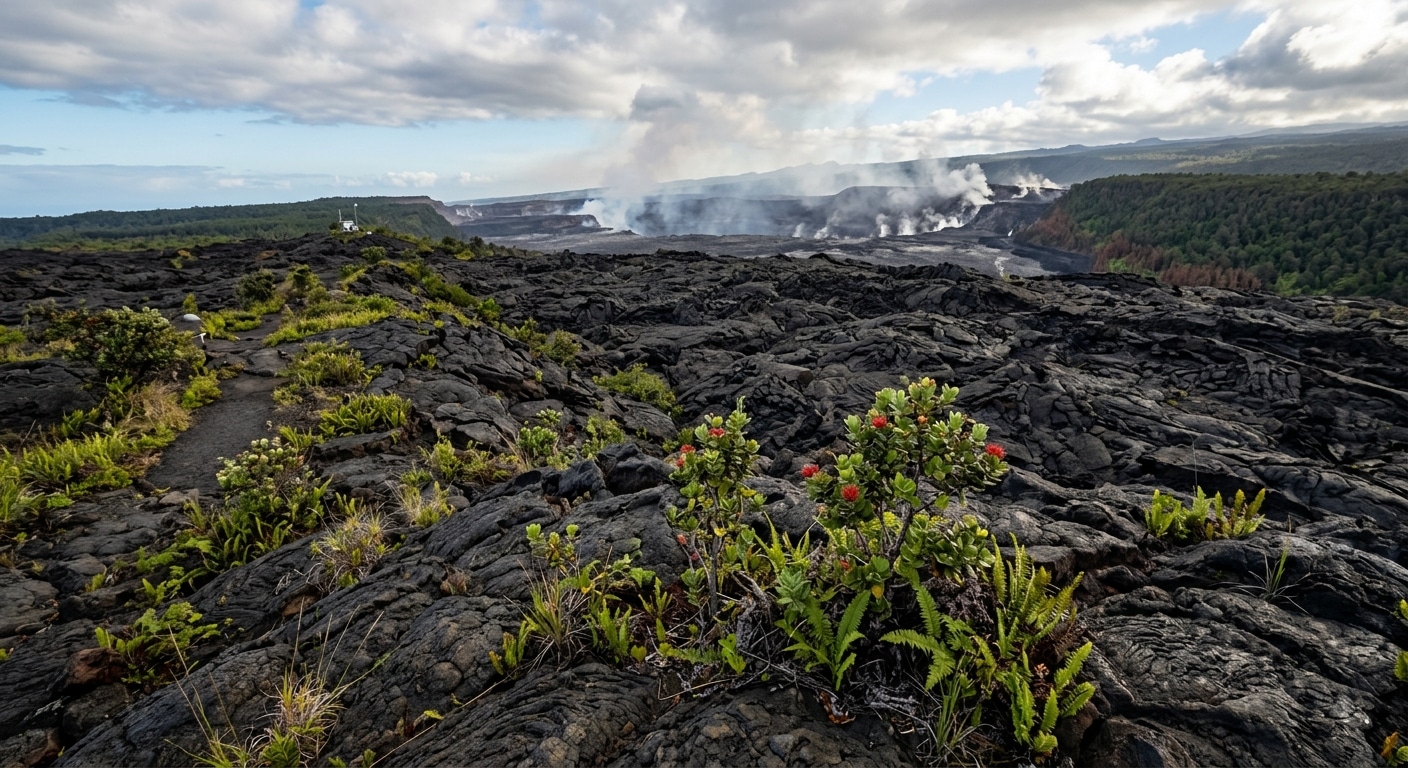
The environmental impacts of Kilauea’s ongoing eruptions encompass both destructive and creative processes that continuously reshape the Hawaiian landscape. Fresh lava flows that have been emplaced during recent eruptive episodes have buried existing vegetation and altered drainage patterns, yet these same flows represent the beginning of ecological succession processes that will eventually create new habitats for native species. Scientists studying primary succession on recent lava flows have documented the arrival of pioneer species including certain ferns and ohia lehua trees that establish themselves on barren volcanic terrain within years of emplacement.
The volcanic gases released during the 2025 eruptions have created air quality challenges in downwind areas, with sulfur dioxide concentrations occasionally reaching levels that pose health risks for sensitive individuals. The phenomenon known locally as vog, a volcanic smog created when sulfur dioxide reacts with atmospheric moisture and sunlight, affects communities across the island during certain wind conditions. Public health officials have worked to enhance monitoring networks and public awareness campaigns that help residents understand when conditions warrant protective actions such as remaining indoors or using air filtration systems.
Marine environments near coastal areas where lava enters the ocean experience dramatic transformations as molten rock encounters seawater. The explosive interactions between hot lava and cold ocean water create hazardous conditions including steam plumes laden with hydrochloric acid and fine volcanic glass particles. However, these lava entry points also create nutrient-rich conditions that support enhanced marine productivity in adjacent waters once activity subsides. Researchers studying these dynamic coastal environments have documented rapid colonization by marine organisms following the cessation of active lava flows, demonstrating the remarkable resilience of Hawaiian marine ecosystems.
Predicting What Lies Ahead for Kilauea
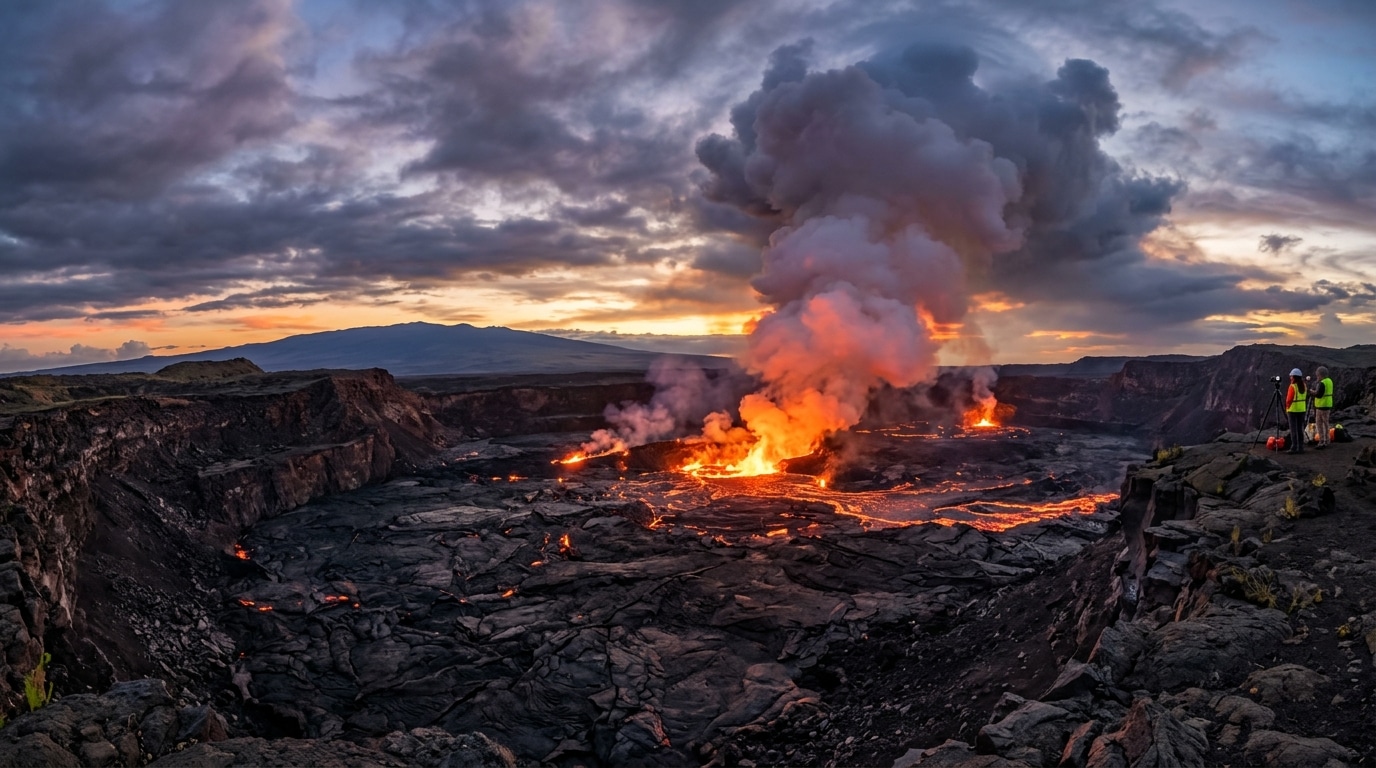
Volcanic eruption forecasting remains an inexact science despite remarkable advances in monitoring technology and theoretical understanding. The scientists at the Hawaiian Volcano Observatory approach prognostication with appropriate caution, recognizing that while certain patterns of precursory activity reliably indicate impending eruptions, the specific timing, location, and magnitude of future eruptive events cannot be predicted with certainty. Current assessments suggest that Kilauea will likely continue experiencing intermittent eruptive episodes throughout 2025, with activity concentrated primarily within the summit region while the possibility of renewed East Rift Zone activity cannot be entirely excluded.
The long-term outlook for Kilauea encompasses time scales that extend far beyond immediate forecasting horizons. Geological evidence indicates that this volcano has maintained high eruption rates for centuries and will likely continue producing eruptions for the foreseeable future. Climate projections suggest that changing precipitation patterns could influence volcanic hazards by affecting the stability of volcanic slopes and the behavior of lava flows encountering surface water. These considerations have prompted researchers to incorporate climate change scenarios into volcanic hazard assessments, ensuring that long-term planning accounts for evolving environmental conditions.
Investment in volcanic monitoring infrastructure continues to strengthen capabilities for detecting and characterizing volcanic unrest at Kilauea and other Hawaiian volcanoes. Recent funding allocations have supported the deployment of next-generation sensors, the development of artificial intelligence algorithms for analyzing monitoring data, and the expansion of community engagement programs that enhance public understanding of volcanic hazards. These investments reflect recognition that effective volcanic hazard management requires sustained commitment to scientific research, technological innovation, and community partnership.
Experiencing Kilauea Responsibly in 2025
Hawaii Volcanoes National Park offers visitors remarkable opportunities to witness active volcanic processes while maintaining appropriate safety protocols that protect both people and sensitive environments. The park has adapted its operations to accommodate varying levels of volcanic activity, establishing viewing areas that provide spectacular vantage points when conditions permit while implementing closures when hazardous conditions develop. Visitors planning trips during 2025 should consult current park advisories and be prepared for potential changes to access and viewing opportunities that may occur with limited notice as volcanic conditions evolve.
The cultural significance of Kilauea to Native Hawaiian communities adds important dimensions to visitor experiences that extend beyond geological spectacle. Traditional Hawaiian understanding recognizes Kilauea as the home of Pele, the goddess of fire and volcanoes, whose presence imbues the landscape with spiritual significance. Respectful visitors take time to learn about these cultural perspectives, understanding that the volcano holds meanings that transcend scientific analysis. Park interpretive programs and cultural practitioners offer opportunities for visitors to gain deeper appreciation of the relationships between Hawaiian communities and their volcanic homeland.
The Eternal Fire Burns On

As Kilauea continues its ceaseless activity throughout 2025, the volcano reminds us of the powerful geological forces that created the Hawaiian Islands and continue shaping them today. The eruptions we witness represent brief moments in a volcanic history spanning hundreds of thousands of years, connecting us to planetary processes that operate on timescales far exceeding human experience. For the scientists who study Kilauea, the residents who live in its shadow, and the visitors who marvel at its displays, this volcano embodies both the creative and destructive potential of our dynamic Earth. The lessons learned here advance volcanic science globally while the communities that call this region home demonstrate remarkable adaptability in the face of ongoing geological change. Whether Kilauea produces spectacular fountains or quiet lava lakes in the months ahead, its activity will continue generating knowledge, inspiring wonder, and demanding respect from all who encounter this extraordinary natural phenomenon.